On Saturday, 19,431 fans — the largest crowd to ever witness a sporting event in North or South Dakota — packed Dana J. Dykhouse Stadium in Brookings to watch the South Dakota State University Jackrabbits defeat the North Dakota State University Bison 33-16. It was the 115th meeting between the two football teams, an annual contest that has come to be called the Dakota Marker game. The winning team goes home with a trophy that resembles the quartzite markers that surveyor Charles Bates used to mark the border between North and South Dakota in 1891, just two years after they became the 39th and 40th states. Photographer Christian Begeman traveled to Brookings to capture all of the afternoon’s festivities.
Tag: brookings
The Ultimate Vehicle
![]() |
| Kent Miller’s Ultimate Outdoor Vehicle was built for ice fishing, but serves a multitude of purposes. |
A lot of good inventions get their start when someone says,”Wouldn’t it be nice if….” That’s what happened nearly four years ago when Kent Miller went ice fishing with some family members. They pulled sleds loaded with gear across the snow, traversed the ice to set up a shack, then tore it down and moved when the fish wouldn’t bite — all of which was made more difficult by his father-in-law’s bad knee. That led to Miller’s,”Wouldn’t it be nice if …” moment.
The mechanical engineer envisioned a vehicle on tracks that could go through snow, could float in case the ice broke, and had space for everything a fisherman might need. Three years of building and testing prototypes finally resulted in the Ultimate Outdoor Vehicle.
Though Miller had ice fishing in mind during development, the UOV is designed to do almost anything in any conditions. The hull is made from marine grade 1/8-inch aluminum for durability. Its heavy-duty rubber tracks with steel links carry it through snow, mud, grass, water and gravel. The hydrostatic drive and zero-turn ability make it maneuverable and easy to control. A canvas enclosure and vinyl windshield and side windows protect the driver and passenger from the elements. Inside are hatches that lock and seal, allowing fishermen to drill holes in the ice without ever leaving the vehicle.
Miller has a degree in mechanical engineering from South Dakota State University and has worked in the field for 20 years. He and his wife, Heather Solberg, also operate Miller Design and Manufacturing from their acreage between Brookings and Volga. That’s where the UOV was born, along with other tracked projects such as a radio-controlled vehicle for a friend who has physical disabilities and a small snow dozer.
Editor’s Note: This story is revised from the September/October 2022 issue of South Dakota Magazine. To order a copy or to subscribe, call (800) 456-5117.
The Lost 74
![]() |
| The Sage brothers (from left, Gary, Kelly Jo and Greg) posed for this photograph as a Mother’s Day gift before they left port in California for the waters off Vietnam. |
There are worse things than being forgotten. Maybe you’re halfway around the world, in the dark of night on the South China Sea, when your ship collides with a much larger vessel.
Maybe you’re a sailor on a nearby boat that attempts to rescue survivors, but all you see is endless water and an eerie quiet.
Maybe you’re a Nebraska farmer listening to the TV news when you hear that the ship on which your three Navy sons are serving has been sliced in half.
Maybe you’re a young wife and mother whose father-in-law telephones to say that your husband — his son — won’t be coming home. You get a telegram from the Navy confirming the news.
A week later, the final note of”Taps” has faded to silence. The burial flags are folded and put away and the sympathy cards have been read and answered; then a lonesomeness settles over great tragedies.
That’s when the survivors contemplate the grace of remembering.
***
Brookings barber Linda Vaa was the young sailor’s wife who got that phone call from her father-in-law in 1969 at the height of the Vietnam War. Fifty years have barely softened the pain.
![]() |
| Linda Vaa, a longtime barber on Brookings’ Main Street, strives to preserve the stories of 74 sailors who died in 1969. |
She met Greg Sage in the summer of 1964 at the Knox County Fair in Bloomfield, Nebraska, just across the border from Yankton and Bon Homme counties in South Dakota.”My sister and I were walking around the fair when she noticed these two boys were following us. It was the day before school started. Finally, we turned around and started talking to them.” One was Greg Sage, a farm boy from nearby Niobrara.”Greg was very shy,” she says.”We probably dated three months before he held my hand. We were just 17 years old.”
Greg was the second of Ernie and Eunice Sage’s four sons. Gary, the oldest, was a typical first-born: serious and eager to help people. He was also a thinker who liked to read. As the United States became more engaged in Vietnam’s civil war, he told his family that he felt he should fight for his country.
Greg, who played football for Niobrara, was less studious than Gary. Kelly Jo, freckle-faced and artistic, was two years younger than Greg. The Sages’ fourth son, Douglas Dean, had barely started school. The boys and their father spent their days hunting, fishing and farming in the hill country of the Missouri River Valley.
***
Gary enlisted in the Navy after high school. Greg and Linda married as soon as they graduated from high school, and within a year Greg followed his older brother into the Navy.”Their dad, Ernie, encouraged them all to join the Navy because he thought it would be safer,” says Linda.
Kelly Jo signed up even before his high school graduation. Gary was on the crew of another ship when Greg was assigned to the USS Frank E. Evans, a 376-foot attack vessel commissioned in 1945 and deployed to the Pacific at the end of World War II. Sailors nicknamed it the Grey Ghost because of the way it looked at sea. The Evans was retooled in the 1960s for anti-submarine warfare. As fighting expanded in Southeast Asia, it began deployments there.
“Gary’s ship pulled into base at Long Beach, California, and he came to live with Greg and I for a while,” says Linda.”He taught me how to make a cherry pie. One day, Greg suggested that Gary transfer to the Evans so they could be together. About then, Kelly Jo graduated from high school and came to boot camp in San Diego. They asked him where he wanted to go, and he put down the Evans so he could be with his older brothers.”
Navy policies discourage family members from serving on the same ship, especially during wartime, but it is not expressly forbidden. In November of 1942, five brothers from Waterloo, Iowa, were serving on the USS Juneau when it was sunk by a torpedo in Guadalcanal in the South Pacific. More than 600 sailors died in that tragedy; there were at least 30 sets of brothers aboard.
The three Sage brothers boarded the Evans along with their fellow sailors in March of 1969 at the Port of Long Beach, headed for Vietnam. Gary was 22. Greg was 21. Kelly Jo was 19.
***
For weeks, the crew of the Evans used their firepower to protect American troops stationed on the Vietnamese coast. When they ran short of ammunition, the 2,200-ton ship was sent to the Philippines to restock before it left for training exercises with the Royal Australian Navy in the South China Sea.
At 3:15 a.m. on the morning of June 3, the Evans crossed paths with the much-larger HMAS Melbourne. Someone described it as a collision between a Volkswagen and an 18-wheeler. The Evans was cut in half. Greg and Kelly Jo were off duty and asleep in the lower berths in the bow. There were reports that their older brother, Gary, was on duty on the stern, which stayed afloat.
![]() |
| The USS Frank E. Evans was a 376-foot attack vessel commissioned in 1945. |
“Nobody knows for certain what happened because it was total chaos in the black of night,” says Linda.”But it seems likely that Greg was crushed, because he was probably right where the ship was hit. What we’ve heard is that Gary jumped to the bow to try to find Kelly Jo.
“Gary had a flashlight, and we’ve heard that he went to the top story. There was a ladder blocking a door there and some officers were trapped inside. A dozen people were trying to get the officers out. Gary gave them the flashlight and then left, we think, to go below to look for Kelly Jo.”
Some of the 204 survivors on the stern and witnesses on nearby ships reported seeing arms reaching out from the windows and hearing screams as the bow laid to one side and then, within just three or four terrifying minutes, sank into the dark sea with 74 men trapped inside.
“That is what haunts so many of the men,” says Linda.”One sailor told me he came off duty when Greg went on duty that night. He took a shower and put on a pair of my husband’s underwear because his were at the laundry. He felt the collision, was thrown around and crawled out from under a mattress. He got to the ladder, but the hatch flew closed. Then, someone who had already got off came back and opened the hatch. At last it was his turn to climb off. He thinks he might have been the last one off. He jumped or was thrown into the water and he swam and swam until he found something to hang onto. A small ship came to save him but he told them he was OK and they should go save someone else.
“Those are the stories we hear,” Linda says.”They still hear the ghosts of the sailors who died.”
***
Ernie Sage finished working the fields of his Niobrara farm on June 3 and went to the house to watch the evening news on CBS when Walter Cronkite reported that the USS Evans had been cut in half. Ernie screamed and his wife, Eunice, passed out.
As soon as he was able, Ernie called Linda, his daughter-in-law, who was living in Omaha with her 13-month-old son, Greg Jr.
A week later, the family held a private service in the Niobrara Lutheran Church, and then they joined the entire community at the school for a military funeral that was televised. Officers folded four burial flags; they gave three to Eunice, in remembrance of her three sons, and one to Linda. A photographer from Life came to document the terrible grief but the magazine never used the pictures; an editor told the family later that it was just too sad for words or pictures.
Ernie, the father, was quiet and crestfallen.”He was never the same,” Linda says.”I think he felt tremendous guilt because he had encouraged them to join the Navy, but it was only because he thought it was safer. He became sad and depressed, so sad that he forgot he had another son at home.”
![]() |
| Doug Sage, 6, the surviving brother, comforted his father in 1969. The family’s grief attracted much media attention. |
The elder Sage spent a week at a state mental hospital, and then returned to his wife and son but he never smiled again — not until minutes before he died in a hospital bed at age 79.
Doug was 6 when his brothers died.”Ernie protected him and wouldn’t even let him drive a tractor or do anything where he might be hurt,” Linda remembers.”He didn’t get to grow up in the carefree way his brothers did, and he had to do naughty things to get his father’s attention.”
Linda says it was hard to return to a normal life. Sympathy letters poured into Niobrara from around the country. News reporters came to write about the little farm town that had sacrificed so much for a war that was growing more unpopular with every passing day.
She also noticed that her own toddler, Greg Jr., was being affected. Well-meaning townspeople spoiled him at every opportunity.
Three years after the crash, she and her son moved 120 miles north to Sioux Falls, where she was able to use her late husband’s GI benefits to attend beauty school and barber school.
In 1974, she was cutting hair at the Grange Avenue Barber Shop in Sioux Falls when Spencer Vaa, a Vietnam veteran who was injured in 1969, walked in and sat in the chair for a trim. They married two years later, and adopted a daughter, Sarah Jane, in 1982.
Spencer’s career with the S.D. Game, Fish & Parks Department led them to Brookings in 1978, where Linda went to work for Brookings Barbers. There, they raised Greg Jr. and Sarah.
***
South Dakota and Nebraska are 7,000 miles from the South China Sea, but the pain of June 3, 1969, could not be healed by time or distance.”He missed his boys so badly, he could never be the same strong man he was before they were killed,” Linda says of Ernie Sage. However, the father found some solace when he heard about plans for the Vietnam Veterans Memorial Wall in Washington, D.C.
“Their dream was to go to Washington and see the names of their boys on the wall,” says Linda,”so when I got a fundraising request for the project I wrote back and said we would help, and I asked for the list of names because I wanted to be sure they got everything right.”
When the list came in the mail, she saw that her husband and brothers-in-law — in fact, all 74 Evans casualties — had been omitted. The Department of Defense had determined that they died outside the war zone.”I had to go tell Ernie,” says Linda.”I would have rather taken a shot to the head than tell him. It was like he lost them all over again. He cried for hours.”
Doug also struggled after the tragedy.”He started out with a big family and then he lost three brothers, and in a way he lost his father,” Linda says. Today he lives in Colorado.
The three Sage sailors’ mother, Eunice, found comfort in her deep Christian faith. She regained her good sense of humor and became a source of strength to others. She was as surprised as anyone when she took on a role as comforter to hundreds of men who survived the nightmare at sea.
That began to happen in 1992, when survivors formed the USS Frank E. Evans Association and started to hold annual reunions. Ernie, who died in 1996, never attended the gatherings but Linda and her son, Greg Jr., began to accompany Eunice Sage.
“The first one I went to was in Niobrara for the 25th anniversary,” Linda says.”We met a bunch of the guys then, and I realized they were wonderful people and they really loved Eunice. When they met her, some broke down and cried and said, ëWe’re so sorry your sons are dead and I’m alive.'”
Linda says Eunice would hear none of that.”She shook her fingers at them and said, ëDon’t ever tell me that again! You’re alive to tell me what happened.'”
Eunice became known as the mother of the association. The Navy veterans took up collections to help her with travel expenses. Every time she arrived, someone would politely suggest that she rest in her hotel room, and she would respond,”I want a cigarette. I want a drink. And I want my boys.” She often remarked that she lost three boys,”but gained a hundred.”
The gatherings taught Eunice and Linda the sadness of post-traumatic stress disorder (PTSD).”We could see that they all felt guilty — survivors’ guilt. Every year we would all go into a room together, maybe 50 or 100 people or more, and every one of the survivors would tell how they got out of the ship. Every one of them has a story and they are haunted by their memories. They remember the arms reaching out of the windows or the screams coming from men in the water. They can still hear the ship breaking apart. They hear the ghosts.”
She says they all tried to restart their lives, but many struggled with work and relationships.”Many have been divorced three or four times. You would think the reunion would just bring back their worst memories but instead it seems to help because we are the Frank E. Evans family. I hug everyone three or four times, and I hug their wives because I know how hard it is for them, too.”
She knows a veteran who was a radarman, like Greg.”He doesn’t normally like to be around people. He moved to the U.S./Canadian border to be alone,” she says.”He has tremendous guilt because he thinks he should have been able to save someone. But he does come to join us.”
The 2018 reunion was held in the Black Hills of South Dakota, at the Grand Gateway Hotel in Rapid City. Linda says a familiar theme arose there: Why aren’t the names of the 74 Evans sailors on the Vietnam Memorial Wall in Washington, D.C.? Are they to be forgotten?
***
Darwin Sietsema leaves his home in Ruthton, Minnesota, every June and travels west into South Dakota. He visits a friend in Yankton, and then follows the Missouri River to Niobrara. After midnight on June 3, he parks his gray Chevy pickup at Farnik’s Market. He walks across the asphalt parking lot to a modest memorial with 74 names inscribed in stone. There he sits for several hours, in the quiet and darkness, reflecting on what he calls,”The worst day of my life.”
![]() |
| Darwin Sietsema was among many would-be rescuers who rushed to help the sailors on the USS Frank E. Evans. Now he makes an annual vigil to their memorial in Niobrara, Nebraska. |
Sietsema grew up in Trosky, Minnesota, where his father operated the grain elevator. At age 18, he joined the Navy to avoid being drafted into the U.S. Army. After basics in San Diego, he was trained as a boiler tender.”It was miserably hot in the boiler room, though, so I worked my way into being an electrician.”
In the summer of 1969, he was assigned to join the James E. Kyes, a World War II-era destroyer. He had three deployments to the South Pacific.”Basically, we went from Pearl Harbor to the Philippines to Vietnam and back to the Philippines to Japan and maybe back to Vietnam. Each deployment was six to nine months. Our job was to fire our 5-inch guns in support of the troops. We could fire a quarter mile off the beach and our shells could go 12 miles.” Sietsema says the North Vietnamese had shore guns that could have reached his ship but the Kyes was never fired upon.
The mission was similar to the Evans, and Sietsema says it’s entirely possible that he crossed paths with one or more of the Sage brothers while they were all living in California. However, it’s a certainty that he was nearby when they died.
“I was asleep lying in my rack,” he says of the fateful night.”I thought it was a dream. Then came the command, ëMan the rail!'”
His ship hurried to the accident site, but they found nothing but the silence of the sea.”We didn’t even know, right away, what had happened. Then we heard rumors that there had been a collision. But the sea was as calm as glass. Right away we launched our motor whale boats.”
As daylight came, the sailors learned the sad news.”On the second day, about a half dozen ships gathered and we had a memorial service at sea. When they played”Taps” it seemed like a haunting echoing sound. I don’t know how it can echo when there’s nothing out there.”
Sietsema remembers that he and his crewmates felt helpless.”There was nothing you could do. It was over with,” he says. But it never really ended, not for him or hundreds of others who were survivors, would-be rescuers, friends and family.
***
As it became obvious that the Department of Defense was not going to add the names of the Evans sailors to the Vietnam Memorial Wall in Washington, the townspeople of Niobrara — who had already created a historical marker to the Sage brothers in 1999 — decided to build a memorial to all 74 in 2016.
“We wanted to make sure their names were on a wall somewhere,” says Jim Scott, commander of the American Legion post.”There are still efforts to add the names to the wall in Washington. I don’t know if that will ever happen. But these men will not be forgotten here.”
![]() |
| Residents of the small Nebraska town of Niobrara, which lies on the South Dakota border near Springfield, vow that they’ll not allow the 74 sailors to be forgotten. |
He and others raised funds to construct a granite memorial with the names of all the sailors. Their pictures are nearby on a vinyl poster.
An observance of the 50th anniversary of the tragedy was held this year on June 2 at 3:15 p.m., the exact hour of the day when the Evans sank (there is a 12-hour time difference between Vietnam and the Central Daylight Time Zone in the United States).
Sietsema was there, along with many Sage relatives, community leaders and dozens of others from South Dakota and Nebraska. The burly Minnesota trucker spoke briefly about that horrible night on the South China Sea, and he lamented that the 74 young men are not remembered on the wall in Washington.
Martha Atkins, the town’s Lutheran pastor, offered a prayer.”On this day of remembering, we bring forth 74 souls who were lost in service on behalf of this country,” she said.”Lord, we call upon you to embrace those families, those comrades in arms and the many, many friends of those 74 courageous young men into your arms of healing, of comfort and into peace.”
***
Linda Vaa is now in her 45th year as a South Dakota barber, working at the shop on Brookings’ Main Street. She gives $8 haircuts to military veterans on the last Tuesday of every month.
She is a busy wife, mother and grandmother. She has also collected books, newspaper clippings and photographs related to the Evans, and she stays abreast of continuing efforts in Congress to add the 74 names to the wall.
Encouraging news came this summer when Kevin Cramer, a U.S. senator from North Dakota, introduced the USS Frank E. Evans Act to require that the names be added. Cramer noted that it’s”not unprecedented” to make changes on the Vietnam wall. He said duplicates, misspellings and omissions have been fixed through the years.
The Pentagon continues to oppose such efforts, maintaining its 50-year-old argument that the Evans sailors died too far from the Vietnam battlefields to be counted as war deaths. The government’s designated combat zone, drawn by President Lyndon Johnson in 1965, did not originally include Cambodia and Laos.
Linda blames President Richard Nixon.”He was losing favor with the country over the war in the summer of ’69,” she says, so there is a theory that he and his generals were looking for ways to lower the number of casualties. She says she’s appreciative of congressional efforts, but she admits to some cynicism after 50 years.”I think it’ll take a president’s attention to change what started so long ago.”
She commends politicians, organizations and veterans who have worked to keep the memories of the 74 alive.”We don’t want them forgotten,” she says.”Those boys will never grow old, they’ll never enjoy their families. ëLest We Forget’ is a motto of the military, and that’s the one thing we can still do for them.”
Editor’s Note: This story is revised from the September/October 2019 issue of South Dakota Magazine. To order a copy or to subscribe, call (800) 456-5117.
A Decade of State-U
Just under decade ago, on an overcast and cool November afternoon, I got into a small two-seater airplane, camera in hand, and lifted off for a memorable and unique photo opportunity. Drones with cameras were not quite a thing yet, so to capture aerials of the renewed SDSU-USD rivalry football game — on hold for nearly a decade as each school transitioned from Division II to Division I — I was obliged to open the side window while the pilot circled the stadium and occasionally dipped the left wing so I could lean my lens out into the air and start snapping. I found myself reminiscing about this experience during halftime of this year’s rivalry game in Brookings, a 28-3 Jackrabbit victory on October 8. Ten years has seen a lot of change, but much remains the same.
This game always draws a crowd, but this year’s nearly set a record. The 19,332 people who packed Dana J. Dykhouse Stadium created the second largest crowd ever assembled in the Mount Rushmore State to watch a football game. Since the rivalry was renewed, I’ve attended and recorded media at all but three of the games. Since 2012, both stadiums have undergone major renovations and upgrades, resulting in larger capacity, better lighting and bigger scoreboards, all of which make this game an even better experience.
Over the last decade, these games have also showcased talented players who have gone on to the NFL. SDSU tight end Dallas Goedert is now with the Philadelphia Eagles. USD quarterback Chris Streveler won a Canadian Football League championship and now plays on the New York Jets practice squad. I also remember admiring the athletic prowess of SDSU running back Zach Zenner in 2012; he subsequently played with the Detroit Lions. As for memorable plays, just last year we witnessed a Hail Mary for the ages inside the DakotaDome that propelled USD to an upset victory and made the rounds on national TV and social media.
Every game of this magnitude is fun to work, but the meeting that really stands out happened on a cold and bitter day in November of 2018. The temperature topped out at 16 degrees before kickoff and steadily declined throughout the game. The 10-mile-an-hour breeze cut right through my multiple layers of clothing by the second quarter, but the light was gorgeous. The cold made every exhaled breath a misty work of art, and the icy atmosphere added elements in the air around the players. It is ironic that the most physically trying day of photographing this series was also the best day to have a camera. That said, I left sometime in the latter half of the third quarter. The sun had set behind the stadium, so I lost the good light … as well as the feeling in my fingers.
Christian Begeman grew up in Isabel and now lives in Sioux Falls. When he’s not working at Midco he is often on the road photographing South Dakota’s prettiest spots. Follow Begeman on his blog.
A Beardless Hobo & Other Homecoming Traditions
I cannot grow a beard. Whenever I try, it looks like those photos we all have of our children the first time they grab a pair of scissors and give themselves, or their favorite doll, a haircut: bald spot here, 3 inches of scraggly growth there.
That’s why I sadly never took part in one of my alma mater’s most time honored homecoming traditions. The One Month Club at South Dakota State University is for students who want to look their hobo-est by the time Hobo Day arrives. Exactly a month before the homecoming game, men stop shaving their faces and women do the same with their legs. It’s all in good fun and a fine way to show school spirit, but I could never compete with my classmates who looked like the guys in ZZ Top after 30 days.
It’s homecoming season at colleges and universities around South Dakota, and when I thought of the One Month Club I wondered what unique traditions students observe at other schools. So I asked around.
One that warms my Scandinavian heart happens at Augustana University in Sioux Falls, where the students nominated for Viking Days king and queen don Norwegian sweaters. It seems appropriate for a school founded by Lutheran Scandinavians, and practical, too. I bet those sweaters take the chill off the cool October morning air on parade day. Incidentally, to celebrate Augustana’s 100th year in Sioux Falls, the school unveiled its version of the popular Monopoly board game called Augieopoly. One of the game tokens is a Norwegian sweater modeled after one owned by the late Dr. Lynwood Oyos, a longtime history professor.
Dakota Wesleyan University in Mitchell crowns not one king and queen, but two. In addition to the royal pair that reigns over Blue & White Days, two members of the freshman class are chosen Beanie King and Beanie Queen. They perform many of the same duties as the homecoming court, but wear blue and white beanies, festooned with optional decorations. The tradition began in 1926 and included all members of the freshman class, but over the years has been whittled down to just two.
Students at Dakota State University in Madison enjoy a citywide scavenger hunt. The Student Services department hides a small statue called the Traveling Trojan somewhere on the DSU campus or around Madison. Clues are given on local radio and on the school’s Facebook page. Whoever finds the statue receives a prize package.
West River students incorporate the Black Hills in their homecoming traditions. During Swarm Week at Black Hills State University in Spearfish, students make an annual pilgrimage to a giant letter H that sits on a mountainside near campus. Visitors to Rapid City may have noticed a similar M on a hillside above the city. Students at the School of Mines make a homecoming trek to whitewash the M, a tradition that dates back to the very first M-Day on October 5, 1912.
Alumni of other colleges and universities surely have their own favorite homecoming traditions. Hobo Day will always hold a special place for me. I’m pretty easy to spot watching the parade along Main Avenue or at Dana J. Dykhouse Stadium for the football game. I’m the clean-shaven one.
Firmly Planted in South Dakota
![]() |
| Niels Hansen traveled to Russia, China and other distant nations in search of fruits, flowers and agricultural plants adaptable to the South Dakota climate and soil. |
For some South Dakotans, the name Niels Ebbesen Hansen is associated with alfalfa. Others recall that he introduced hardy fruits for their orchards. Some, noting his association with another plant breeder of renown, may remember him as”The Burbank of the Plains.” His contributions to the field of horticulture have been mentioned in magazines and newspapers for over 70 years. Writers delight in recounting his adventurous trips to the steppes of a Russia still ruled by the czar. Others refer to his forays into China, where bandits roved the countryside. To me he was grandpa.
These extraordinary adventures came at the turn of the 20th century, when Niels Hansen became the first plant explorer for the U.S. Department of Agriculture. His mission was to find plants that would grow in South Dakota and surrounding states. Plants brought from the eastern half of the country struggled to find sustenance in a semiarid land with cold winters. Hansen proposed the radical idea that South Dakota could grow virtually any plant if it were crossed with hardy strains of foreign plants. He spent his life as a horticulture professor at South Dakota State University proving that theory.
But there was more to the man than his adventures or his desire to introduce plants that would grow in what he fondly referred to as”my American Siberia.” A man of science, Niels was also a man of quiet Christian faith. He once told a group of students at a chapel meeting,”I felt I was doing the Lord’s work.”
Hansen was also a man of poetry. He once told a visitor that he arrived early to work so he could write a few lines of poetry each morning.”It helps get my thinking started,” he said. He often submitted poems to Pasque Petals, the magazine published by the state Poetry Society. His love of poetry endures in the stanzas of the SDSU song,”The Yellow and Blue,” which he wrote. Students saw him marching across campus with a tall, lanky music professor named Francis Haynes, beating out the rhythm of the song and lyrics. To some, they looked like Ichabod Crane and a shorter friend.
The fine arts were especially dear to Niels Hansen, and he supported them any way he could. Rain or shine, he walked his grandchildren to whatever cultural events were offered at the college. He introduced the Scandinavian tradition of the Maypole, a mainstay of the campus May Day celebration for many years.
An immigrant to America, Hansen was proud of his Danish roots and of the family that contributed so much to his character. He was named for a grandfather who had received the highest civilian award from the king for 50 years of service. Niels’ father served in the army and also received a medal from the king. His cousin was a member of the king’s cabinet during the German occupation. When he traveled abroad, Niels visited aunts, uncles and cousins.
Hansen attributed his love of art to his father, Andreas, a fresco painter and a loving, supportive figure in the son’s life. The fond letters they exchanged over the years showed how important that relationship was to both of them.
As important as foreign travels were to his professional life, his most important trip was taken in 1897 — important not because of the prized alfalfa he discovered, but because it was on this trip that he wrote a letter proposing marriage to the woman he had been courting for six years.
The romance began when he was an assistant professor of horticulture at Iowa Agricultural College, now Iowa State University. While at Ames, Hansen spotted a teenager, Emma Pammel, who had come to attend the college and to live with her brother Louis, head of the botany department. Rules about dating students were strictly enforced, but even if they had been more lenient, Emma wanted nothing to do with the son of an immigrant painter. The family still has Niels’ invitation to Emma to attend a college event. She returned the invitation with the written comment,”No! No! No!”
![]() |
| Hansen built South Dakota State University’s horticulture department, but he also dabbled in poetry and writing. He composed the lyrics to “The Yellow and Blue,” one of SDSU’s school songs. |
Niels’ courtship efforts were aided by his friend George Washington Carver, a student at Ames who later gained national renown for his teaching and his work with peanuts and other plants at Tuskegee Institute in Alabama. Louis Pammel had befriended this ambitious son of a former slave, admiring his desire for education.
Being black, Carver was not allowed to live in a dormitory, so Pammel arranged for him to live in the basement of the botany building. As their friendship flourished, Carver spent many evenings with the Pammel family. Also a classmate of Emma, he had access to the family that Hansen could only hope for. Seeing Hansen despondent over the lack of progress in his pursuit of Emma, Carver would ask with a broad smile,”Would you like me to take some roses from the greenhouse to Miss Pammel tonight?”
After he left Ames to become the professor of forestry and horticulture at the college in Brookings, Hansen persisted in this courtship.”Of course I think more of you than of ‘a mere friend’ — a thousand times more,” he wrote to Emma.”How can I help it? You have known that my sentiments are more than friendly for a long time. I know I tried very hard for a long time to forget you but could not make the slightest progress in so doing.”
“When he sees something of value he knows it, and when he goes after a thing, he gets it,” Secretary of Agriculture James Wilson once said about Hansen. Such was his pursuit of Emma, whom he adoringly called”My White Lily.”
After six years and many letters, Emma, who had been pursuing a career in teaching, finally succumbed to Niels’ entreaties. They were married in the fall of 1898. They were considered a handsome couple, she a fashionable, vivacious wife who entered into faculty life with gusto, he proudly escorting her to faculty balls, where they became known for their elegant dancing.
Six years later their idyllic marriage ended. Emma was stricken with appendicitis when she was six months pregnant with their third child. In those days there was no local doctor who would operate on a woman in this condition, so Hansen frantically wired to Mayo Clinic in Rochester, Minnesota. A doctor agreed to come, but was held up in a blizzard, and arrived too late. Emma’s appendix burst, and peritonitis set in. She lingered five days before dying in mid-December, 1904.
Heartsick with grief, Hansen now found himself unable to care for the two small children, Eva, 5, and Carl, not quite 2. The Pammel grandparents took the children into their home in La Crosse, Wisconsin. Hansen was now without wife or children. This sorry state existed for three years, until he married Emma’s sister, Dora, who had been helping to care for the children.
After Emma’s death, Hansen made two more trips to Siberia for the Department of Agriculture, the last in 1908. Then he and the department parted company. He had overspent his budget, and department staff persuaded Secretary Wilson to drop Hansen from the roster of plant explorers.
Hansen may not have been surprised. His relationships within the bureaucracy had been difficult from the start. He had been hired by and reported directly to Wilson, a friend from his Iowa days. Some staff members resented his position as a favored employee. The situation was likely exacerbated when the secretary praised him publicly:”I have 1,200 men under me, but none who knows how to work like Hansen. There is only one Hansen.”
Hansen may have failed in Washington politics, but he could be persuasive with the South Dakota Legislature. He stood before the farmers of the legislature and pleaded his case for more research funds. Three times they granted him money for different projects. They provided funds for the first commercial-size greenhouse on state property. They sent him to Siberia for more alfalfa, and they were persuaded to fund a trip to China to find hardy pears.”You can always appeal to a man’s stomach,” Hansen joked.
![]() |
| Hansen, pictured with his wife Dora, remained active until shortly before his death in 1950. |
The State Fair at Huron was also important to Hansen. He would fill the Horticulture Hall with flowers, fruits and agricultural products from the experimental farms and orchards across the state, an opportunity to show farmers the variety of plants they could grow in South Dakota. One year he displayed over 500 kinds of gladioli. He always enjoyed talking to farmers about their problems.
Reporters delighted in interviewing Hansen, because he had a delightful self-deprecating manner. They could count on some witticism or quote. Interviewed in retirement, he told one reporter that he had to keep working to prevent”ossification of the coco.”
One year at the State Fair he showed his impish sense of humor when he set up a small pond in the center of the Horticultural Hall, purporting to contain”invisible fish.” Many an onlooker peered into the pool trying to spot them. Those who knew Hansen were not surprised at this harmless bit of tomfoolery.
He once remarked,”I can recommend overland travel by troika as a sure anti-fat cure. But I can also say that after a 700-mile ride I have never cared about sleigh riding.” Another time he humorously commented,”Riding hundreds of miles in a springless wagon is good for indigestion, if you can stay in the wagon. It settles your food.”
A visitor once suggested,”I suppose you could even breed a square pea that would stay on your knife!”
“As a matter of fact, I found a three-cornered pea once in Asia that might turn the trick,” Hansen shot back.”Some day I may get to work on that.” Praised for a new red-fleshed apple, Hansen remarked,”It’s like a candied apple without the cinnamon. We may be able to breed that into it later.”
After Hansen’s death, the Brookings Register observed in an editorial:”Those who have commented upon his traits of character and temperament have all missed one thing, and that was his sense of humor. He could illuminate his tale with sly and subtle humor which made his discussion of even highly technical matters interesting to the untrained.”
It was on the many foreign trips that Hansen proved his courage. Once, far from civilization on the steppes of Russia, a peasant guide tried to rob him. Hansen quickly showed the guide the special permit he carried with the seal of the czar attached. The guide recognized the seal and realized Hansen was under the protection of the emperor. He crossed himself, knelt in submission, and promised to fulfill his duties.
Another trip took him through a region of northern China where bandits roamed. He later told his family the grisly story of how the road into one village was lined with the heads of bandits impaled on spikes as a warning to would-be marauders.”But I kept on with the pear work,” he commented casually.
Hansen gave lectures on anything from Russian agriculture to the propagation of roses. Sometimes he strayed from his major field and rendered opinions on topics such as”The Sublimation of the Libido,” or the atom bomb. He could easily fill a hall because his speeches, given in a soft voice that retained a slight Danish accent, were amusing and insightful. But those who heard him speak might have been surprised to learn that he had overcome a speech impediment with elocution lessons and diligent practice.
Hansen enjoyed the movies, and rarely missed the offerings of the theaters in downtown Brookings, the Fad and The State. He had a preferred seat in the theaters, which the ushers faithfully set aside for him, sometimes asking people to move if they sat in”Professor Hansen’s seat.” He regularly took his grandchildren to Sunday matinees, then to Fenn’s ice cream store.
Those who sat behind Professor Hansen witnessed his passionate involvement with a movie. In one, the hero was alone in a desert without water, struggling through the sand, obviously dying from thirst. Hansen kept muttering,”Cut the cactus! Cut the cactus!” Not surprisingly, the hero finally found the cactus that contained water and saved his life.
Hansen remained active until a year before he died. In his 84th year, he began to fail. The once sturdy body that had taken him across the windswept steppes of Russia and on many treks across the prairies, now was slowed by inflammation of the heart. In his last few weeks of life, he could recognize only his son Carl. His thoughts wandered back in time. Once he became extremely agitated, shouting,”Where are the keys to the apples? Where are the keys to the apples?”
Carl knew exactly what concerned his father. He was referring to his keys — the research notes on the many cross-pollinations he had made. When Carl reassured him they were safe, his father became calm.
Finally, in 1950, Niels Hansen’s infirmities required hospital care. One evening his grandson, David Gilkerson, and his wife came to visit. They found him curled up asleep on the hospital bed. On the bedside table, a stranger had left a tribute to Hansen’s life — a single pear. It was as though the visitor had said,”See, Professor Hansen. This is what I grew on one of your trees. Thanks for all you have done.”
Editor’s Note: This story is revised from the July/August 2004 issue of South Dakota Magazine. To order a copy or to subscribe, call (800) 456-5117.
The Strangely Familiar World of Andrew Kosten
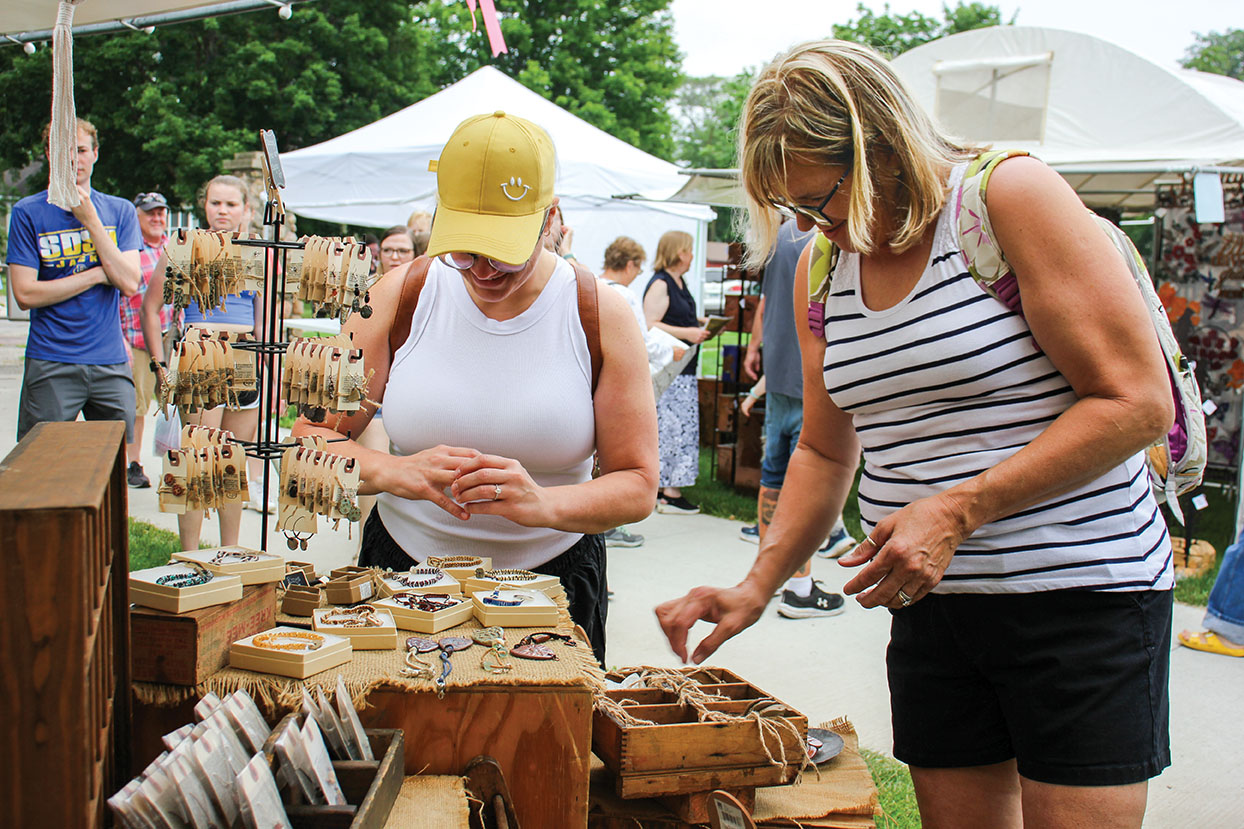
“I’m a basement dweller,” says Andrew Kosten. And it’s true. He banks major dwell time in the basement studio of his Brookings home, cranking out intaglio vignettes from the world inside his head.
From this world, strange, forlorn and fantastical characters conduit via pencil onto the pages of his many sketchbooks. Then his work begins. “I’m always making, always working,” he says.”I’m kind of the silent worker type, that’s just inherently who I am.”
Printmaking through the traditional etching method is labor-intensive. “It’s a very physical process. That’s what I really love about the process is its physicality. That’s why I’ve chosen to make prints. I’ve been in love with the process since I first did it.
“I was a painter before I was a printmaker. I did still lifes. I had a fixation with objects and formal aspects of spaces and color relationships as they were represented in these still lifes.
“My work wasn’t really about a whole lot. It was just about painting. But I had a separate body of work in sketchbooks. People were like, ‘You need to be doing this.'”
The Memphis, Tennessee native took a printmaking class at Washington University in St. Louis and, like a printer’s ink, he found a niche.”[The University of South Dakota] was put on a shortlist of grad schools to look into. Initially I was like, ‘South Dakota?’ And I put it on the bottom of the list. I visited Vermillion and I was attracted to the calm and the spaciousness. I could tell this was like going off somewhere and just focusing on your work. I was able to get a lot done there.”
He studied under Lloyd Menard, the legendary longtime instructor-artist and Frogman’s Print Workshop founder, in his final years at USD. After grad school, Kosten took turns at several teaching posts before settling in Brookings, where he lives with fellow artist and partner Diana Behl.
Kosten’s art seems to draw more from an inner well than his adopted home, though you can find elements of prairie solitude in his work.”I think I’ve absorbed the sense of openness, the open spaces — the idea of mapping your observations. Spatially there’s a way the work has opened up in a way that’s new for me. Whether or not you can attribute that to the locale I don’t know.”
There’s a whimsical reminiscence in his work, though one that seems to recall the bygone days of another dimension. But maybe that’s memory. Whether the pining kind, or even the good-riddance variety, images of the past are altered in the mind’s eye by time and subconscious agendas.
The characters from Kosten’s world might seem familiar to you, though it’s hard to articulate why.”I’ve always been an avid collector. Going back to my childhood, I’ve had collections of things that were more about a fixation or fascination with that particular object and the feelings or nostalgia they evoked.”
A first-generation Sony Trinitron delivers vivid aperture grille TV technology to his studio. In a hobby room off his studio he has a collection of box turntables, cassette decks and curly-cord analog phones. “Much of what influences my work is the experience of the every day and how I can mix that in to this dark and comical world I create in some of the imagery.”
The dreamy tonal quality of his prints is an effect of the aquatint technique he uses in parallel with the traditional etching process.
He starts with a drawing and a clean copper plate, coating the plate with a waxy, acid-resistant ground. To create the aquatint effect, he applies rosin to the plate, heats the rosin for an evenly distributed coat, and then uses a scraper tool to create varying gradients of shade.
He scratches the drawing into the ground with an etching needle, then gives the plate an acid bath that etches lines into the areas where the ground has been scratched away.
After the plate has been etched and the ground wiped away, ink is applied and finds its way into the areas etched beneath the surface. The plate is wiped down again, then run through an etching press, which applies pressure to transfer ink from plate to paper. The paper is then hung to dry. Each additional color, if any, requires another run.
Every step in the process is meticulous, and some are time-intensive. But in the process is where this basement dweller hits his stride. “I can isolate myself and get deeper and deeper, so I’ve got to maintain that healthy regimen of getting out and being exposed to art and artists.”
One way he interacts with other artists is through exchange portfolios. A group of artists each sends a print to the person putting together the folio. Then they send each artist a complete set of prints by each participating artist. When we visited, Kosten was printing an edition of 25 two-color prints for an exchange.
The print — inspired by something an adolescent Kosten glimpsed across the Lake of the Ozarks at summer camp — is a nice introduction to the hazily dreamlike quality of his work. Do you have some recollection of this place but you’re not sure how? Dive a little deeper.
Michael Zimny is the social media engagement specialist for South Dakota Public Broadcasting in Vermillion. He blogs for SDPB and contributes arts columns to the South Dakota Magazine website.
The Legend of Springerle
The Benson family of Brookings likes their Christmas cookies picture perfect. Every year, Leah Benson rolls out an embossed cookie called springerle, which means”little knight” or”jumping horse,” using a special rolling pin carved with pictures.
Springerle originated in southwestern Germany.”The legend is that back then, the peasants were so poor that they could not afford to give gifts. To celebrate the winter solstice they would carve the gift they wanted to give into a piece of dough, let it dry, bake it and give it to their loved one. Most carvings were things of nature because they worshipped Mother Earth,” says Benson, who has researched the ancient cookie and teaches classes about it at medieval re-enactment fairs.”The dough was leavened with hartshorn, which is a powder that comes from inside a deer’s antler. Today we use baking powder.”
Benson learned about springerle from her grandmother.”She always made these cookies with a special rolling pin that was handed down through the generations. I started collecting these rolling pins when I was 40,” Benson says. Rolling the dough with a springerle pin or pressing it with a carved mold creates pictures on the cookies — some more intricate than others.”Most of the modern rolling pins have simple nature designs, although I do have one very expensive one with the life of Christ carved into its 24 panels,” Benson says.
Her grandmother’s recipe creates thick, mixer-challenging dough. Benson recommends draping a kitchen towel over the back of the mixer to avoid spraying flour and powdered sugar. After mixing and rolling, the unbaked cookies must dry for 24 hours to preserve the pictures through baking. The cookies bake at a low temperature, resulting in hard, pale-colored treats perfect for dunking in coffee.
Many families bake springerle at Thanksgiving and save them until Christmas to allow the flavor to develop, but Benson’s family eats them right away because they prefer a softer texture. Rolling thicker cookies or baking for less time results in a softer cookie as well, but beware of rolling them too thick. You’ll get cookies that are”humped up and cracked and kind of ugly,” Benson says.
![]() |
| Springerle is a German tradition that became a staple of Christmas for many South Dakota families. |
Springerle
4 medium eggs, separated
1 pound powdered sugar
3 cups flour with 1/4 teaspoon baking powder added
1/8 teaspoon anise oil extract, or flavoring of your choice
Using an electric mixer, beat egg whites in a large bowl until stiff peaks form. In a separate bowl, beat egg yolks for five minutes until light and lemon-colored. Add beaten yolks to egg whites and whip for three minutes. Gradually sift powdered sugar into egg mixture and add anise oil. Slowly add flour and baking powder until dough is stiff, smooth and velvety. You may need to knead in the last of the flour by hand.
Divide the dough into 3 or 4 pieces. On a well-floured surface, roll out each piece 3/8-inch thick using a regular rolling pin. Using a springerle pin, roll across the dough to create imprints. Cut cookies apart and place onto ungreased cookie sheets close together but not touching. Cover with a light kitchen towel. Allow them to dry for 12 hours, then flip to let the undersides dry for another 12 hours.
Flip cookies right side up and bake at 250 degrees for 45 minutes. They may turn tan on the bottom, but should not brown.
Editor’s Note: This story is revised from the November/December 2013 issue of South Dakota Magazine. To order a copy or to subscribe, call (800) 456-5117.
The Doorhickey
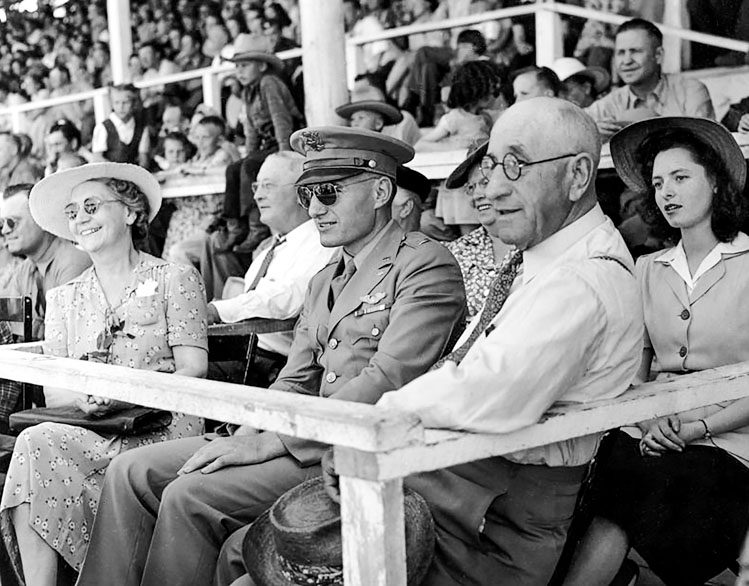
The Doorhickey seems simple. It’s a curved piece of clay with a suction cup that solves the problem of opening and closing a sliding glass door with your hands full. But bringing the Doorhickey to reality has been a long and bumpy road for Brookings inventors Ginger Thomson and her husband and business partner Jay Vanduch.
The idea began 35 years ago.”I liked to entertain and sit out on the patio,” Thomson says.”I was always going in and out with things ‚Ä®in my hands. I knew there had to be a better way, but that was 1980. There was no Internet, no Google. I didn’t know anything about developing a product.”
By 1996 Thomson and Vanduch were married. The idea resurfaced 
as they built their new house. Vanduch thought of utilizing suction cups and used a bath toy to test the concept. They developed several prototypes and eventually secured a patent on the way the bolt within the suction cup is threaded into the handle. When the handle is rotated, it creates a tight vacuum seal.
The Doorhickey created buzz at inventors’ shows, and the couple was investigating two licensing agreements in October 2013 when they discovered their patent had lapsed. Fortunately they secured another, so you could one day see Doorhickeys in national stores. Until then, visit www.doorhickey.com. They sell individually for $14.99 or as a pair for $25.
Editor’s Note: This story is revised from the July/August 2015 issue of South Dakota Magazine. To order a copy or to subscribe, call (800) 456-5117.
A New Autumn Tradition
We love traditions at South Dakota Magazine, and autumn is full of them — holidays with family, visits to the pumpkin patch, hikes and drives to see the colors change. A few years ago, our magazine staff started our own fall tradition. Every September we all attend the South Dakota Festival of Books.
That event, started 14 years ago by the South Dakota Humanities Council, alternates from East River to West River. This year it was held in Brookings for the first time.
Nerds like us were attracted to the book festival from the start. We realize the words”book festival” may not excite a certain portion of the population, especially during football season. However, we guarantee that there is something for everyone. This year there were beer tastings, honey cooking demonstrations and discussions on a wide range of topics. These were among our favorites:
Bernie Hunhoff, our editor-at-large, was curious about a session debating the true story of Hugh Glass.”Perkins County never gets much attention, so I found it interesting that one of the best-attended sessions of the book festival was about something that happened there along the Grand River in 1823 — the confrontation between Hugh Glass and a grizzly bear,” he says.”I doubt that many of the people in the room have ever seen the Grand River or been to Lemmon, the nearest town. But they were very interested in the places and the people, and I thought that said a lot about the sense of community in South Dakota.”
Andrea Maibaum, our production manager, went to a”cooking with honey” presentation, where they used honey from hives near Brandt.”It was really interesting because there are so many different types of honey out there all based on what type of pollen is collected when the bees make the honey,” she says. Festivalgoers also enjoyed tours of Adee Honey Farm near Bruce.
Publisher Heidi Marsh liked spending time in Brookings’ amazing Children’s Museum.”We enjoyed Chris Browne, illustrator of the popular comic strip Hagar the Horrible, as he sketched his childhood dogs and discussed growing up in a creative household,” she says.”The presentation was great … but it was even better because just next door kids were finger painting and growling at a giant T. rex.”
Rebecca Johnson, our special projects coordinator, was surprised to hear some great music.”I introduced two singer/songwriters — Brian Laidlaw, a poet and folk singer and Barry Louis Polisar, a children’s author and performer whose song was played during the opening credits of the movie Juno. It was a real treat to meet them and see them play in such informal settings.”
Our managing editor, John Andrews, grew up in Lake Norden, home of the South Dakota Amateur Baseball Hall of Fame, so I wasn’t surprised he found a baseball session at the festival.”I enjoyed learning about the only South Dakotan to ever throw a no-hitter in Major League Baseball, and about how it was taken away,” he told me.”I went to see Dirk Lammers, who wrote Baseball’s No-Hit Wonders about all the no-hitters that have been thrown in Major League Baseball. The league officially recognizes 295 no-hitters, but there used to be 50 more.”
In 1991, the Committee for Statistical Accuracy, chaired by then MLB Commissioner Fay Vincent, changed the official definition of a no-hitter, declaring it a game of nine innings or more that ends with no hits. That was bad news for South Dakota’s own Jim”Death Valley” Scott. Lammers said the Deadwood native and pitcher for the Chicago White Sox had long been credited with no-hitting the Washington Senators on May 14, 1914. He threw nine hitless innings, but unfortunately his team couldn’t score any runs. The game went 10 innings, and Scott gave up a leadoff single in the 10th and allowed one more hit before losing 1-0.
And that’s how the book festival goes: those who attend are interested in learning more about our state and its people, either through books or, even better, by the conversations they have in the hallways between sessions. The book festival reminds me of what I like best about the state fair in Huron — but it’s indoors and lacks the cotton candy and corn dogs. We’d love to see you at the book festival in Deadwood next September. Join our autumn tradition. It is the perfect complement to pumpkin pies and apple picking.


