Posted on 1 Comment

Roaming the Tall Grass

By Christian Begeman

The May/June 2026 issue of South Dakota Magazine features a story on the few tall grass prairie remnants remaining east of the Missouri River. When I was asked to help illustrate the story, I was surprised by how many photos I have taken in and around these places.

I grew up in short and mixed grass country along the Dewey and Ziebach county line west of the Missouri. Only in wet areas or in wet years did the grass get so high that you couldn’t see where your boot fell, which is an important thing in rattlesnake country. When I first began exploring the tall grass preserves with camera in hand, it was unnerving to not be able to see the ground below … and whatever sinister critters may be lurking. Turns out plenty of creatures call the tall grass home. My favorite are the colorful and elusive butterflies. From monarchs to tiny eastern-tailed blues, I have been known to spend hours on the trail seeking that perfect close-up shot.

I also discovered the beauty of the grass itself when peering through my macro lens at blooming sideoats grama florets at the Sioux Prairie Preserve near Colman. Big bluestem, cordgrass and many other tall grass regulars all flower during the summer and photographing them can be nearly impossible due to the wind that we regularly endure on the Northern Plains. To be honest though, a good breeze is welcome in that it keeps the gnats and mosquitos mostly at bay. Yep, it’s not all butterflies and flowers in tall grass country. Myriads of insects live there and a good breeze plus insect repellent is a must when exploring.

After gathering photos for the article, I was asked to gather again for a flyer promoting the new prairie grass area at Good Earth State Park. As I waded back into the archives, I noticed the crescendo of forays into tall grass preserves started slowly about 10 years ago and reached full throat when I was challenged to find and photograph the elusive green orchid. Until that point, I thought wild orchids only grew in exotic tropic locales. Thankfully, I was wrong. South Dakota is home to over 20 orchid species depending on who’s counting. The tall grass preserves are a haven for these beauties and their allies, all of which are a paradise for a camera guy with a macro lens.

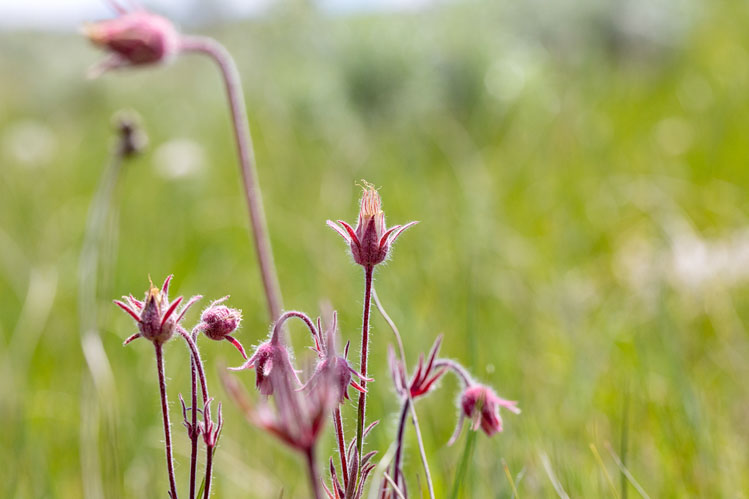
Earlier this month, I was out finding the season’s first pasque flowers in the Coteau Hills overlooking Jacobson Fen in Deuel County. As I got up close to frame a few fuzzy portraits of our state flower, I got the idea to share these new photos along with a few other tall grass favorites I had gathered but did not make the final printed story. I hope they convey the sense of wonder and enjoyment I get while out roaming the tall grass remnants.

Christian Begeman grew up in Isabel and now lives in Sioux Falls. When he’s not working at Midco he is often on the road photographing South Dakota’s prettiest spots. Follow Begeman on his blog.

Posted on Leave a comment

Grassland Delight

“Here was the endless prairie, so rich in its blessings of fertility, but also full of great loneliness–a form of freedom which curiously affected the minds of strangers, especially those to whom the Lord had given a sad heart.”
―
O.E. R¯lvaag, Giants in the Earth

There aren’t nearly as many places to look out over endless prairies as there were before immigrants arrived. Yet there are still a few places where it can be accomplished right here in South Dakota. From the farmhouse I grew up in, you could drive about 2 miles west over prairie dirt tracks to the rim of the Moreau River breaks and look out over what seemed like a vast wild land of hills, draws, cactus and grass. Thunder Butte hovered in the distance with an unknown number of prairie dogs, rattlesnakes and deer making their living in vastness between. Some years it was green for most of the summer, other years only saw it green for a few weeks in May. Even so, the views affected any and all who laid eyes on it, and especially me.

I saw my first Golden Eagle”out west” as we called it. It made a large wooden fencepost seem tiny as it slowly lifted off to catch the swirling wind. When night rolled in from the east, I heard my first coyotes sing to the evening out west. It wouldn’t be the last I’d hear that lonely song drift in. Rainstorms and thunderclouds seemed to always originate from out west. It wasn’t hard for me to understand why Thunder Butte was so named. This landscape of the open, mixed grass prairie got a hold of me then and I haven’t shaken it since.

From spring to late summer, the magic of the grasslands can often go unseen. The shy wildflowers don’t grow in vast numbers but instead sprinkle the grasslands with decorative color. Butterflies and songbirds are easier to spot in season, but still, you have to be intentional when seeking them.

I have now lived the majority of my life east of the Missouri, and I have come to appreciate the tall grass patches on that side of the state. There is not as much of it to be found since the soil is so conducive to growing corn and other small grains. Even so, when you can find a good patch of tall grass it is worth taking a close look. The hiking is a little harder as the grass is thicker. It took me many years to be comfortable putting my foot down where I could not see the ground. Thankfully prairie rattlers do not abide in tall grass country.

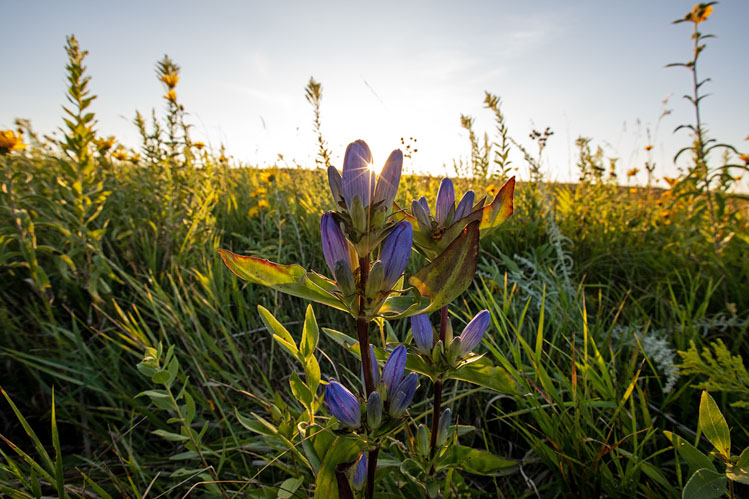
This column is a long look back at the few times I was able to get out and explore our state’s grasslands this past growing season. From Harding to Moody counties and points in between, please enjoy a few postcards from the prairie.

Christian Begeman grew up in Isabel and now lives in Sioux Falls. When he’s not working at Midco he is often on the road photographing South Dakota’s prettiest spots. Follow Begeman on his blog.

Posted on Leave a comment

Clams of Buffalo Gap

Remnant of an ancient sea are sprinkled throughout the Buffalo Gap National Grassland.

The Great Plains were long ago inundated by a shallow sea called the Western Interior Seaway. Scientists say that marine fossils are evidence of this sea, not that Sasquatch carries a sack of fossils around, scattering them hither and yon to confound the trackers on his tail. You be the judge.

Marine fossils can be found in certain geological formations throughout the Western Interior Seaway region, including the Pierre Shale, which is notoriously fossiliferous. Ancient sea monsters like plesiosaurs, prehistoric sharks and big fish like Ichthyodectes have been plucked from its obsidian mounds. There are also beautiful ammonites (ancient mollusks that resemble a nautilus) and plain old inoceramids (ancient clams).

A portion of the Buffalo Gap National Grassland in the southwest corner of the state has a reputation for ammonite and other fossil finds in scree fields surrounding Pierre Shale and limestone exposures. To get there, take Highway 18 west about a mile and a half past Edgemont, turn right on the 9A, then after about 7 miles, a left on Fall River Road, which will take you into forest land near the Wyoming border. You’ll need a map, as BGNG lands are fairly checkerboarded.

The landscape’s euphoric undulance is so liberating you can understand how people invested in imposing grids would oversell the people they imported to work them on arability. Time goes soft and loses its linear oomph here. You can almost imagine a cowgirl riding the seaway on a mosasaurus like its name was Tilikum.

I still have much to learn about the art of fossil hunting, probably missing ammonites beneath my feet. Inoceramids are everywhere.

Think of how different your day is from that of your ancestors, say a thousand years ago. Clam (and pre-clam) life hasn’t changed much in 70 million years or so. The predators may have changed, from pterodactyls to Italians, but what’s that matter to a clam? Clams have always hung out in the sand, waiting for high tide so they can screen floaties with their siphon. That’s about it.

Their presence is a reminder of the Western Interior Seaway (or Sasquatch and his bag of fossils) and the epochal changes witnessed by these lands. Will our present human episode leave traces as permanent as those left by these bivalves?

Michael Zimny is a content producer for South Dakota Public Broadcasting and is based in Rapid City. He blogs for SDPB and contributes columns to the South Dakota Magazine website.

Posted on Leave a comment

Growing in the Wind

The last few years I’ve found myself in knee deep grasses, spongy fens and alongside muddy sloughs more times than I can count. Why? Well, photography would be the easy answer, but in reality, the reason is more nuanced than simply getting an interesting photo.

First of all, you should know this about me: I’m a bit stubborn. Don’t believe me? Just ask my mom. I have learned this stubborn streak has an interesting way of working itself out in regard to my photography. It takes me a while to get interested in something. I mean really interested. But once I’m hooked, I’m a goner. Put another way, I’m initially reluctant (stubborn) to take on a new interest, but after a while I realize the interest that has caught my attention is what I’ve been searching for all along. This has happened to me in regard to country churches, spring birding and now botany (wildflower photography in particular).

Three Junes ago, I remember sitting in the middle of tall, green grass that swayed and flexed on a warm wind at Oakwood Lakes State Park in Brookings County. I was surrounded by blooming meadow anemones, blue damselflies and flitting orange skipperlings. I had my camera, but just sitting there quietly under the warm, early summer sun watching a little bit of nature just be, just wonderfully exist, was a revelation.

Three years later, you’ll find me wandering a Nature Conservancy prairie preserve, national park or state park nearly any time I can in the warmer months. I’ve heard folks say that being in nature is their”church.” I understand that sentiment, but it is something different for me. My time in nature is a respite, a reminder and a teacher. I find relief from the daily grind, and I’m reminded of the intricate creativity and knowledge of the Creator. As for the teaching, let me try to explain.

As a photographer who enjoys macro photography, I have learned the importance of getting down to a wildflower’s level to look a butterfly in the eye. In order to obtain clear and crisp focus as well as the best composition, I’ve learned to wait out the wind, to pause under cloud cover and make the most of sunshine. I’ve learned to look behind and above, even though I’m focusing on what is right in front. I’ve learned to take my time and not be in a hurry. I’ve learned that our prairies consist of far more than grass.

Up until the last few years, I had no idea that both our tallgrass and shortgrass prairies harbor so much diversity. It is something we South Dakotans are taught from an early age, but it wasn’t until I looked long and walked slow upon the grasslands that the truth really sunk in. Growing up West River, it wasn’t hard to find pastures never put under the plow, but on the east side of the state, the remnant tallgrass prairies are a lot harder to find. Thankfully they still exist in places. I’m grateful to those who’ve strived to maintain the tallgrass prairie and all its intricate glory. They are not only lovely places to wander with a camera, but also places to learn and grow.

Christian Begeman grew up in Isabel and now lives in Sioux Falls. When he’s not working at Midco he is often on the road photographing South Dakota’s prettiest spots. Follow Begeman on his blog.

Posted on Leave a comment

Oceans of Prairie

“Tish-ah!” said the grass … “Tish-ah, tish-ah!” … Never had it said anything else — never would it say anything else. It bent resiliently under the trampling feet; it did not break, but it complained aloud every time — for nothing like this had ever happened to it before. …”Tish-ah, tish-ah!” it cried, and rose up in surprise to look at this rough, hard thing that had crushed it to the ground so rudely, and then moved on.”

— From Chapter 1 of Giants in the Earth, A Saga of the Prairie, by O.E. Rolvaag

I grew up in the short-grass prairies of Ziebach and Dewey counties in the 1970s and’80s. I remember dry years filled with grasshopper hordes and dust. Some of those summers, the pastures were only green for a few weeks out of the year. As a sophomore in high school we were required to read Giants in the Earth by O.E. Rolvaag. I remember musing over his description of the tall grass prairie Per Hansa and his fellow settlers traversed to get to their claim in southeastern South Dakota. It was hard to imagine grass growing chest high. Growing up in rattlesnake country, I was (and still am) wary of walking through grass taller than my ankles. I like to see where my next foot fall will be. It took a strong dose of imagination to picture making my way through the tall grass like those old timers did, but that is exactly what I’ve been doing over the last month and a half.

I first heard of the Nature Conversancy’s prairie preserves from Greg Latza, one of the area’s best and well-known photographers. I was looking for advice in finding and photographing my first pasqueflower in the wild. He suggested checking out Makoce Washte Prairie Preserve near Wall Lake in western Minnehaha County. I had no idea such a place existed. I remember first arriving and being a little crestfallen. It seemed to simply be a small pasture with a bit of wetland and a few gentle, easy hillsides. Corn and beans fields flanked the preserve and a small cattle pasture lay across the county road. I did eventually find a pasque growing there though, so I filed the place away in my memory for future photographic considerations.

This summer has been wetter than most, and too wet for many. Even so, the last few years of abundant moisture has caused the tall grass prairie preserves on the eastern side of the state to grow lush, thick stands of grasses dotted with wildflowers and forbs. The latter is why I returned to Makoce Washte as well as a handful of other preserves during the last month and a half. I’ve always been fascinated with native prairie flowers and they have a tendency to attract interesting butterflies, birds and insects. That means these prairie preserves are a treasure trove for a photographer with a macro lens (and plenty of insect repellent).

The untamed winds that push through the Northern Plains can make macro photography in the open prairie a bit difficult, but it also helps keep the biting gnats and mosquitos at bay. One of my main objectives on these recent forays was to find and photograph the blooms of the tiny flowers that the native tall grasses produce. In the past, I’ve not noticed the miniature bits of beauty these grasses provide, but once I saw them, I couldn’t stop looking. Despite their constant waving in even the gentlest of breezes, I got a few photographs that I’m happy to share. I recommend getting out and taking a look for yourself. There are still late summer and early fall flowers blooming on the prairie preserves, which are free to the public to hike. For more information visit www.nature.org.

Christian Begeman grew up in Isabel and now lives in Sioux Falls. When he’s not working at Midco he is often on the road photographing South Dakota’s prettiest spots. Follow Begeman on his blog.

Posted on Leave a comment

Prairie Isn’t Prairie Without Sky

Sunlight illuminates the rolling prairie north of Mission Ridge, near the confluence of the Cheyenne and Missouri rivers.

To begin to see the prairie, walk away from buildings, power poles, asphalt, away from the sound of motors, away from anything electronic, especially anything that beeps. Walk in the grass that reaches perhaps to your ankles, lithe, whippy grass that has evolved with fewer than 16 inches of moisture a year. Walk until the only sound is the wind combing that grass and the chitter of a flock of horned larks somewhere above and behind you: the invisible birds of the plains. Walk and breathe deeply, inhale clear down to your toes, that clean, indefinable smell of grass that has never known chemical fertilizer, grass that holds man’s fate in its slender stems.

Prairie grass stands close to its ancestors; grass specializes in simplification. Wind-pollinated, grass flowers need no heady fragrance. No honey, no splashy colors. Some grasses do reproduce by flowering, but others spread by underground stems that creep sometimes through the grittiest, grayest, least fertile soil on the planet.

Of all the plants on earth, grass is most important to man. From grass like this evolved all the breadstuff we eat: corn, wheat, oats, rye, barley, rice, sugarcane.”It yields no fruit in earth or air,” said John James Ingalls, a Kansas senator,”and yet should its harvest fail a single year, famine would depopulate the world.” And Rumi, a Sufi mystic who lived from 1207 to 1273, said,”One half the planet is grass. The other half grazing.”

Only standing in undisturbed prairie grass can you truly appreciate prairie sky. Stand tall. Tilt your face to the sky; open your eyes wide. Turn your head from one shoulder to the other, and then turn around and do the same so you can see the whole bowl of blue, frothy with clouds.

Look carefully around you. You should see no sign of habitation. White settlers sensibly put their houses in valleys and low places close to water sources, following the practice of earlier Native residents both for practicality, and for safety from storms. And a low location offered concealment, too, from marauders, from wind. Most ranches in arid country lie down long winding gravel roads from the nearest highway, down in any available dip. Perhaps the house is sheltered by windbreak trees. The corrals are downhill, to protect the water supply.

“Only standing in undisturbed prairie grass can you truly appreciate prairie sky,” writes Hasselstrom. Such prairie can be seen in Harding County.

Only modern settlers are foolish enough, and rich enough, to plunk houses on top of hills. A hilltop house requires a deep well and powerful pumps to bring water to the surface. A house atop a hill must contain a monster furnace to fill it with heat when the thermometer reads 35 below zero and the winds are blowing 50 miles an hour. But most modern residents no longer earn a living from the land, so they situate their houses for the view without realizing that they have doubled, tripled the costs of their own living. They’ve also destroyed the prairie for everyone within sight of their misbegotten lodgings. If anything like this is in sight, walk farther. Use the time to breathe deeply.

The prairie sky. Standing with your eyes open, you must be able to see a harrier hawk rise up from that ridge to the south, wings extended and gleaming bronze in sunlight. Watch her fly, swoop, dip, glide and hover across the face of the ridge and down a half mile to the dam where the ducks scatter under her shadow.

Then the harrier tilts her wings and is lifted by the wind up to soar over your head, turning one eye then the other to see you clearly. Turn your head and watch as she leans first one way then the other against the wind, circling, pitching, angling down along fence lines until finally she drops on a vole or mole in the grass.

Wait. Wait.

The hawk rises, lifts great wings, ascends to the top of a tree at the very edge of your vision. With binoculars you can see the smooth neck bend as she begins to feed on a morsel of prairie life, a morsel of grass made flesh. Like yours.

Breathe deeply. Look around again. A few power poles may trace a lacy filigree at the edges of the blue, and a few trees may gather like seashore foam fringing the blue world overhead. But that’s all. A true prairie sky is clean, without neon, without smog, without the chatter of aircraft. No artificial lights shatter the perfect darkness of the night.

Only with the whole sky as background can you really see the great horned owl drop from the cottonwood near the house, swing around behind the windbreak junipers and alight on the branch of another cottonwood where she instantly looks like a broken-off stump. Only by watching for a long time will you see her glide out over the grass, drop on a rabbit, hold it down with one taloned foot while she turns her head, scouting for danger.

In the whole sky, you can really see the flock of red-winged blackbirds leap out of the cottonwood by the dam, and swing a mile around the hayfield, their gold and red wing patches signaling in the sun. Then they swoop, calling and whistling, into the branches of the two dead cottonwoods by the house. You can see barn swallows demonstrating their daring flying, zipping under the deck of the house, through the broken pane in the barn window, between the bars of the corral gate.

A thunderstorm approaches this otherwise peaceful prairie in Harding County, north of Buffalo.

Only the whole prairie sky allows you to properly see clouds. The Navajo have a proverb:”The clouds must look like many sheep before the rains will come.” Look up: When you see flat-bottomed cumulus clouds with puffy heads arranged as evenly as sheep in a pasture or as tiles on the floor, find your umbrella.

Late in the summer, look forward to the towering cumulus clouds called”cauliflower” because their crowns are boiling upward into blue sky like bubbles in a bathtub. Then watch out for the revealing shape of an anvil against the dark blue: ice crystals building into a thunderstorm likely to bring hail that can flatten a hayfield in minutes, killing birds, rabbits, damaging man’s possessions. After hot days, beware of the pouch-like formations called”mammy” clouds that may signal a tornado.

In the wide prairie sky, you can spot the undulating wing beats from a distance, and watch until they come close enough to identify a great blue heron, flying from the nesting spot on Battle Creek 6 miles to the north to this shrinking pond on the prairie where it will stand on one leg for a few hours while hunting frogs. In summer, the heron may be almost invisible among the crowds of sunflowers along the edges of the pond. In winter, the heron is a cultural icon, a Chinese painting against the silver water as it slowly freezes in the falling snow.

Only the whole sky is large enough so you can hear the shooping and chortling and chuckling of the sandhill cranes miles away. You turn your head this way and that, eyes straining for a sight of the wavering V shapes. Lie down; relax. Let your eyes slide over the sky. There, far to the north, the line thinner than a pencil leaves, growing closer and thicker as the sounds drop to you, hooting and cooing and laughing. The shifting line of birds, mighty wings outstretched, is headed south to gather on the Platte River in Nebraska. Only the whole sky is enough so you can see several V’s of them ó 20, 60, 200 cranes at a time, breaking into groups, circling up the sky until they hit a fast wind that shoots them south, deploying into another ragged arrow shape.

Only the whole sky will hold and amplify the thunder that begins somewhere to the north. The ground shudders as the clouds shimmer: a B-1 bomber takes off from Ellsworth Air Force Base, blasting upward until it is only a silver dot, trailing white vapor into the sunset. Headed perhaps for Iraq, it booms its message of war over this quiet landscape. Only the whole sky allows you to understand the immensity of its power, its importance. Think of it: filled with munitions, and with men and women whose job is to protect this prairie and everything connected to it. Only the whole sky can contain their gallantry, and their work.

The whole sky must be visible for proper appreciation of a sunset. I may be facing east when I notice puffy clouds turning from gray to pink. Instinctively, I look west, where the sunset is supposed to be. It’s there too: golden rays shooting up into the sky or turning the underside of a sky full of clouds pink and gold. When clouds are heavy in the west, sometimes the sunset can’t be seen at all where it should be, and the reflection in the east is so vivid I distrust my sense of direction.

While my mind wrestles with a writing project, I often search for a quotation, a summary, a comforting reminder that someone wiser than I am has considered the same subject. This time, I turned to Henry David Thoreau:”Thank God men cannot fly,” he said,”and lay waste the sky as well as the earth.” Oh Henry, did you speak too soon?

The decisions that can protect the prairie sky rest with us. Without the grass, without the harrier and the owl, the whooping cranes and the redwing blackbirds, the prairie can’t exist.

Editor’s Note: This story is revised from the July/August 2010 issue of South Dakota Magazine. To order a copy or to subscribe, call (800) 456-5117.

Posted on Leave a comment

Autumn Grasslands

Emily Dickinson was a great poet but she underestimated an important plant species when she lamented how she longed to be grass-like.

The grass so little has to do, — A sphere of simple green,

With only butterflies to brood, And bees to entertain,

And stir all day to pretty tunes, The breezes fetch along,

And hold the sunshine in its lap, And bow to everything.

Life hasn’t been that simple for grass, especially native grass on the prairies of the Great Plains that were once an ocean of green. In many regions, 99 percent of native grasses have succumbed to urbanization and agricultural development. Blue stem, wheat grass and other varieties have been buried by concrete and asphalt, replaced with domesticated cousins such as corn and soybeans, and swallowed by man-made lakes and forests.

South Dakota’s native prairie, though similarly threatened, has fared better than most. West River’s ranching culture depends on the shortgrass prairie; consequently, successful cattlemen develop great respect for the lands on which their livestock graze.

I once saw an old rancher kneel in the summer grass and point to a dozen different species of grass (there are 9,000 in all) that were growing within a few feet of his boots. He listed them by name and knew when they thrive — hot season, cold season, drought and drought-on-the-way.

Thousands of acres of South Dakota’s grasslands are under the auspices of the Nature Conservancy, a non-profit group that has protected over 119 million acres around the world. Its largest tract in South Dakota is Ordway Prairie west of Leola where over 300 plant species and 400 wetlands provide a lifestyle for a herd of bison and other plains wildlife.

State and national parks have also been helpful. Wind Cave National Park encompasses 28,000 acres of prairie grasses and ponderosa pine near Hot Springs in the southern Black Hills. But the National Park Service is the biggest single steward of South Dakota’s grasslands, supervising the 600,000-acre Buffalo Gap National Grasslands between the Badlands and the Nebraska border as well as the 125,000-acre Fort Pierre National Grasslands in the center of the state. Hunters, hikers, bird-watchers, photographers and naturalists frequent the grasslands, but others don’t count them on their”bucket list” of places to see before they die.

However Mary Lata, a self-proclaimed”grass geek,” says attentive visitors to any of South Dakota’s grasslands soon discover that there’s much more than meets the naked eye.”Think of it as a chocolate chip cookie,” says Lata, who spent two seasons as a ranger at Buffalo Gap and now works as an NPS ecologist.”The matrix is the grasses. That’s the dough. And it makes a difference whether you use butter or margarine. Butter is the species you want and margarine is what you don’t want. The chocolate chips are the flowers and forbs that make it look good. The thistles and other weeds are things we don’t want, like fake chocolate chips.”

Grasslands have always been changing — not just from season to season but even from century to century.”The grasslands of the Great Plains exist because of three frequent disturbances,” Lata says. They are fire, drought and grazing.”We might have had years or decades when we had a lot of grazing and lots of rain, and drier times when we had more fires.

“We don’t know what the composition of the grasses was when Lewis and Clark came through. It changed when the Lakota came because they had horses and they used fire differently than it had been used. Then the Europeans came and they did things differently, and they were soon followed by trains and the trains are still causing fires.”

Fire isn’t always bad, she says.”The forest service is very good at putting fires out, but we often don’t have the money to do prescribed fires because that can be very expensive even though it’s necessary to maintain a healthy diversity of grasses. Fire is as necessary as grazing. Some people ask why we don’t just graze rather than burn, but cattle won’t eat yucca or cactus so you eventually get the same imbalance as if you only burned and never grazed.”

The grass geek says grasslands are especially overlooked in autumn.”People don’t come to national parks to see the grass, but when they take the time to look they are usually surprised. They see the blue grama, the Indian grass with its fluffy golden heads, the turkey foot blue stem, and pretty soon they can see that each is different.”

Lata says the grasslands are especially striking in late fall before the first hard frost.”Then you’ve still got some flowers, mostly yellows and purples, on top of the grasses that are starting to change color. And then after the frost, you lose the flowers but the grass colors start to jump out even more.”

We owe a lot to grasses, she says.”As a species, we didn’t stand up straight until we got out of the trees and onto some grass.” So take a moment this fall to appreciate the grasses of South Dakota.

Editor’s Note: This story is revised from the September/October 2009 issue of South Dakota Magazine. To order a copy or to subscribe, call (800) 456-5117.

Posted on Leave a comment

Wild Idea Buffalo Co.

Cheyenne River Ranch buffalo roam freely on thousands of acres of native grasses. The ranch is owned by Dan and Jill O’Brien with a focus on grassland restoration and humanely harvested meat sold via Wild Idea Buffalo Co. Dan has been a wildlife biologist and rancher for over 30 years and is author of Buffalo for the Broken Heart: Restoring Life to a Black Hills Ranch.

Bonny Fleming captured these photos by 4-wheeler this spring. View more of her photos or purchase prints here.

Posted on Leave a comment

All Good Things Must End

South Dakota’s rural solitude is church-like to many of us. I don’t know how many farmers and ranchers have told me through the years that they’ve felt closer to God on the land than in a pew.

When cowboy troubadour Kyle Evans sang “I’m in Heaven on a horse on the wide open prairies of Dakota …” he spoke for everybody who has ever chewed on a blade of blue stem.

But as church-like as the prairie might be, it seemed even holier at Blue Cloud Abbey in Grant County — a picturesque little monastery that grew into a popular retreat center for all sorts of people, including South Dakota’s reflective writer Kathleen Norris.

The true story of how the monks came to locate near Milbank is as sweet as the prairie grass. The priests and monks at St. Meinrad Abbey in Indiana wanted to establish a new monastery in the Dakotas so they sent four brothers to scout the area in 1949. They liked a spot above the Missouri and James Rivers near Yankton, but WNAX’s tall radio towers obstructed the view so they decided to drive to Fargo, North Dakota.

On the way (this was before I-29 was built) they stopped outside the tiny town of Marvin and saw a rolling, wooded string of hills above Grant County’s Whetstone Valley. The land was rocky but they liked it so they went to nearby Milbank to inquire. They were directed to the Milbank banker, who told them that they land had just been listed for sale within the last 30 minutes. He offered them 300 acres at $22 an acre.

Their good timing and the banker’s name were signs they couldn’t ignore, so the Benedictine monks immediately inked the deal. The banker’s name? Effner Benedict.

There were 40 founding members, but their numbers have now dwindled to a dozen and three are over 90. “What else can we do?” asked Abbot Denis Quinkert, as he solemnly spoke of the monastery’s plan to close the doors.

Abbot Denis hopes a religious group will take over the monastery, but no one knows what will happen to the beautiful facility. The only thing we know for certain is that the same spiritual quality that was discovered by the Indiana monks 63 years ago — a spirituality that is very familiar to all who love the land in South Dakota — will be there to await the next tenants.