Posted on Leave a comment

Buffalo Battle

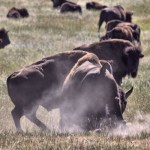
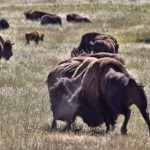
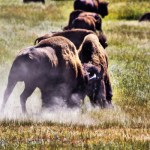
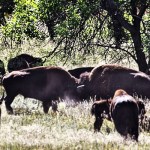
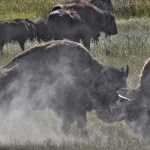
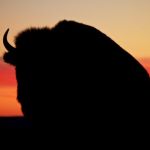
Michele Richter shared these photos of buffalo battling in Custer State Park last Saturday.

“What started out as a shoving match next to the Park road resulted in brute strength of these two,” Richter says. “It was so quick. I felt my heart pounding out of my chest trying to photograph it and marvel at it at the same time.”

Visit this link to see more of her work or purchase prints.

Posted on Leave a comment

Grill Your Next Catch

Editor’s Note: This story is revised from the Sept/Oct 1988 issue of South Dakota Magazine. To order a copy or to subscribe, call 800-456-5117.

Fish will never replace steaks and burgers on South Dakota barbecue grills, but when we talked to him in 1988, Sioux Falls restauranteur Dave Thompson suggested that more people charbroil the fish they catch in our rivers and lakes.

Thompson learned about barbecuing fresh fish on trips he made to the coasts. He said that considering South Dakota’s growing reputation for fishing, it’s time more people tried grilling their catch.

Fish need to be firm and solid to be charbroiled. “Most of the fish we charbroil are swordfish, tuna and red snapper — fish that have a more steaky-like firmness to them. The softer fish… just fall to pieces,” he said. Salmon and walleye, favorite Dakota gamefish, are also just right for the outdoor grill. He said many people don’t like to barbecue oily fish like catfish because the meat can become mushy.

Although he had never tried to charbroil carp, the barbecuing process can help eliminate the “fishy” taste. “You get the charcoal marks on it (fish) and you fry the seasonings in real well. A lot of the fishy flavor comes from where the skin is; get the skin off the fish, that will help.”

Thompson said some fish are just fishy. “It depends on the time of the year it’s caught and size of the fish. Big walleyes aren’t as good as 1 1/2-3 pound walleyes. You get up to the big 7-8 pounders and they are not near as good eating as small fish.”

For the calorie conscious, Thompson said fish is low in calories, depending on what you add. Butter, sauce and other treats will tip the calorie scale. He said teriyaki sauce and lemon pepper butters seem to be the perfect partner for fish.

To begin grilling, grease the grill and fish with oil, to prevent sticking. On an open grill, fish should be cooked on each side. To determine the time, measure the fish at the thickest part (behind the head) and allow 10 grilling minutes for each inch. Cooking time will also depend on how hot the coals are and the distance between the coals and fish. Spread chive butter, teriyaki sauce or lemon pepper butter on each side while grilling. To accompany the freshwater cuisine, Thompson suggested an icy draft beer, wine spritzers or white wine of any kind.

Thompson said fish should be prepared and cooked the same day or the following. “If you keep fresh fish at all, you need to keep it between two ice bags to keep the temperature down so bacteria can’t grow.”

Whether you call it barbecuing, grilling or charcoaling, the searing coals will spice up the taste of fish. “You get that smoky flavor, the same way a steak picks it up from the charcoal or the wood that you’re using to give it a woodsy-outdoor type of flavor, rather than just a broiled piece of fish that might be kind of flavorless.”

Stuffing the fish with herbs and flavorings such as basil sprigs and sliced lemons will also perk up the flavor. Intensify the smoky flavor by putting various aromatics, such as mesquite, hickory or cherry wood chips on the hot coals.

Posted on Leave a comment

Bridging the Seasons


As someone that enjoys every aspect of food, I read a lot of blogs on the subject. There are gardening blogs that help me determine what I want to grow and the best way to do so. There are photography blogs that focus on the beauty of foods, raw, prepared and in states in between. And of course, there are cooking and recipe blogs that share the process of preparing amazing meals, sweet baked goods and every type of delicious delicacies.

However, when the first of September rolls around, I am always disgusted with a large percentage of my chosen form of entertainment, knowledge and enlightenment. The dawn of the ninth month seems to be the official kick-off for all things autumn in the blogging world. It is all pumpkin and apple all the time, and I am never ready for these signs of winter. I want to hold on to summer as long as possible. Embrace it. Savor it. Memorize it to carry me through the bone-chilling cold days of snow that I know will inevitably come.

I won’t willfully ignore the fact that many of our gardens are only just now producing hearty tomatoes, peppers, and zucchini. Fall does not officially begin until September 22, and the carefully cultivated vegetables don’t just die because the calendar changed a page. There will be plenty of time for apples and pumpkins.

Because I spent Sunday tromping around in a cool, drizzly (turning to pouring every time I ventured outside) rain, and this morning was overcast, windy and very fall-like, I will give in a little to heartier comfort foods. They still must pull from the produce that is rolling in from the garden, though. The last of this season’s sweet corn is harvested and it deserves to be celebrated. Peppers are at their peak, and if you are lucky enough to have the rich flavors of a poblano, why wouldn’t you use it? Make a Poblano and Corn Crab Chowder, bake a pan of corn muffins, and slice a plate of just-picked tomatoes and herbs on the side. Serve a meal that bridges between the dwindling days of summer and the coming days of fall.


Poblano and Corn Crab Chowder

Adapted from Cooking Light

1 medium poblano chile
1 tablespoon butter
1 cup onion, finely chopped
1/2 teaspoon kosher salt
1/2 teaspoon sugar
1/4 teaspoon chipotle chile powder
2 cups fresh sweet corn, cut from the cob
1 cup half and half, divided
1/2 pound small red potatoes, diced
2 cups water
2 tablespoons flour
1 cup whole milk
1 pound lump crab meat

Preheat broiler. Place pepper on a foil-lined baking sheet to roast. Broil 8 minutes on each side, or until blackened. Immediately, place pepper in a zip-top bag and seal. Let stand 10 minutes. Peel and chop the pepper.

Melt the butter in a large Dutch oven or soup pot. Add onion and next 3 ingredients. SautÈ until the onion is tender, stirring occasionally. Add corn, stir to combine, and cook briefly…still maintaining the crispness of the corn. Remove 1/4 cup of the corn mixture and combine with 1/4 cup half-and-half in a blender; process until smooth. Add potato to soup pot and sautÈ briefly. Stir in the water and bring to a boil. Cook until the potato is tender.

Combine the remaining 1/4 cup half and half and flour in a small bowl, stirring until smooth. Add flour mixture to soup pot. Cook 1 minute, stirring constantly. Return corn puree to the pan. Stir in the roasted poblano, milk, and crab; bring to a simmer. Cook until heated through, stirring frequently. Serves 4.


Fran Hill has been blogging about food at On My Plate since October of 2006. She, her husband and their two dogs ranch near Colome.

Posted on Leave a comment

River Conservation — Where’s the Downside?


The U.S. Fish and Wildlife Service and the National Park Service have a pretty good idea. (No, not closing down the D.C. Booth Fish Hatchery in Spearfish; that’s a dumb idea.) The feds would like to create the Niobrara Confluence and Ponca Bluffs Conservation Area along the Missouri River between Pickstown and Sioux City. They’d like to purchase land and conservation easements from willing landowners in South Dakota and Nebraska to “conserve important wildlife habitats, increase quality recreational opportunities, preserve sensitive cultural sites, and maintain sustainable farming and ranching operations in the region.”

Let’s see: landowners get paid, critters get cover, hunters and kayakers get better scenery…where’s the downside?

Senator Dan Lederman (R-16/Dakota Dunes) must see a downside. He’s hollering that the Niobrara/Ponca conservation plan is a nefarious “federal land grab” that “threatens private property rights.” Lederman’s conservative henchblog is promulgating accusations that the feds haven’t given affected landowners enough notice or enough time to comment on the plan.

I can only assume that Lederman’s attacks are motivated by political considerations. They certainly aren’t motivated by facts or a consistent commitment to conservation or property rights.

The Fish and Wildlife Service and National Park Service have been gathering public input on the Niobrara/Ponca project since winter 2012. The current comment period, which ends September 30, is actually an extension (announced last June) of the original comment period, which was opened on April 2. The feds have more than doubled the comment period to give citizens six months to study and weigh in on the project’s draft environmental impact statement.

The feds have invited public scrutiny in many ways. In addition to the usual notices in the Federal Register, they have sent landowners postcards with information on the conservation easement plan. They have held two rounds of public meetings throughout the project area. When the April meetings got snowed out, FWS and NPS rescheduled. They’re not exactly keeping the Niobrara/Ponca project secret.

As for the threat to private property rights, I can’t figure out what Senator Lederman is talking about. Everything the feds say about the Niobrara/Ponca plan speaks of working with willing, voluntary landowners. FWS and NPS can’t use eminent domain to force landowners to sell… unlike TransCanada, which uses eminent domain to build its Keystone pipeline system, a project Lederman and friends wholeheartedly support.

If you don’t like the Niobrara/Ponca conservation plan, if you still want to be able to drain and plant crops and build industrial feedlots on your land, go ahead: the feds can’t make you sell them your land or grant you a conservation easement for this project.

But if you own land near the Missouri or Niobrara, and if you’ve been sparing some prairie grass and wetlands the plow, and if you’d like some compensation for taking a pass on six-dollar corn, the feds have a good deal for you, for river critters, and for the rest of us… if, and only if, you are willing.

Editor’s Note: Cory Heidelberger is our political columnist from the left. For a right-wing perspective on politics, please look for columns by Dr. Ken Blanchard every other Monday on this site.

Cory Allen Heidelberger writes the Madville Times political blog. He grew up on the shores of Lake Herman. He studied math and history at SDSU and information systems at DSU, and has taught math, English, speech, and French at high schools East and West River.


Posted on Leave a comment

Lost in South Dakota


A woman and two men spent the night in the Badlands this summer when they lost their way in the Sage Creek Wilderness Area. The hikers, all in their twenties, called 911 on Sunday evening after becoming lost in the rocky crevices and peaks.

The park’s search and rescue team headed to the Pinnacles Overlook to look for the hikers. They spotted them by air from a mile away. After a texting conversation, the hikers and rangers decided the safest option was for them to sleep in the wilderness. The rough terrain is dangerous to traverse in the dark, and the sun was setting fast. Early the next morning, the rangers rendezvoused with the hungry trio.

The mishap had a happy ending, but it was a reminder that although sometimes it feels like there isn’t much room for exploration or discovery, South Dakota has some big wide open spaces. Kim Ode, a Sioux Falls native who now writes for the Minneapolis Star Tribune, wrote some tips to traversing the Badlands in a recent issue of South Dakota Magazine. First, she advised that you should bring a compass, but not depend on it. She recommends keeping a recognizable point in front of you and behind you so you can know your position at all times.

“It’s amazing how the landscape blends into sameness once you’ve hiked over a few ridges,” she wrote. “Stay focused.” The easy ability to find yourself lost in the Badlands is also the reason it is worth visiting, according to Ode. “Enjoy the Badlands for the respite they provide from modern life. You are walking amid the bones of an ancient land. If you can, give them a couple of days — the first to get the buzz out of your head, the second to let in the silence.”

Dale Korslund, an Irene farmer, also spent a night in the wilderness after getting lost while hunting with his uncle in the dense Ponderosa pines in the Black Hills. It was November of 1965 and Korslund was tracking a deer in Rifle Pit Canyon, southwest of Cheyenne Crossing. By 5 p.m. the sun had sunk over the mountain horizon and he realized he was lost.

“They say I was walking in circles,” Korslund recalls. “I finally found shelter under a couple of fallen trees.” The next morning, after a grueling night of temperatures near zero, a team of game wardens and forest rangers found him.

He was reunited with his uncle, who joked that he was about to put Korslund’s face on a milk carton. “That wouldn’t have done any good,” Korslund was in a good enough mood to joke in reply. “Most of the guys out there drink Jack Daniels.”

Stay safe as you explore South Dakota. Our population is already too sparse. We’d rather not lose anyone.

Posted on Leave a comment

Another Good Day in the Badlands


I think it is appropriate that the last column of this photographic series of South Dakota’s natural landmarks is dedicated to the unique landscapes of Badlands National Park. According to the National Park Service’s website, approximately one million visitors from all over the world visit the Badlands every year. And why not? The park consists of 244,000 acres, 64,144 of which are deemed wilderness acres. It is the largest expanse of protected prairie in the national park system. The park is home to American Bison, white tailed and mule deer, bighorn sheep, prairie dogs, rattlesnakes, fox and wily coyotes. Hawks, owls and occasional eagles grace the open skies above the eroded masterpiece of land below. It is a perfect place for a camera-wielding nature lover like me.

While researching the history of the Badlands, I found an online booklet describing the history of Badlands National Monument. (It did not become a full-fledged park until 1978.) From that booklet, I read that early French-Canadian trappers called the region le mauvaises terres a traverser, which means “bad lands to travel across.” Other traders applied the term “bad lands” to this locality as well as to any section of the prairie country “where roads are difficult….” The Dakota Indians called the region Mako Sica (mako, land; sica, bad). General George A. Custer described the area as a part of hell where the fires burned out.

Despite the seemingly bad press from the history above, I’ve grown to love the area over the years. Any trip I take to the Black Hills is almost certain to include a detour through the Badlands. I’ve learned that some of the best opportunities for photography in the state are found there, particularly in the golden light of evening or early morning. An earlier column of mine was devoted to a single morning of spectacular light on the eastern borders of the park on a Thanksgiving Day morning. I’ve also had good luck seeing and photographing the park’s wildlife. One of my favorite stories of shooting wildlife is the cold February day where I ended up racing a coyote near the Bigfoot pass. The park also has bobcat residents as well as the endangered black-footed ferret. I’ve not been able to see or photograph either of these yet, but those animals are definitely on my bucket list.

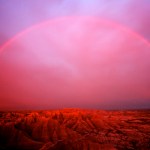
My absolute favorite time to be in the park is during and after bad weather. I’ve witnessed some of the most amazing and breathtaking light when a late afternoon or evening summer storm passes through. Twice, I’ve seen the setting sun backlight the billowing clouds and change the landscape to eerie oranges and deep reds. This spring, I was able to see a massive full rainbow form at the panoramic point overview. This rainbow lit up the eastern sky after the sun had set. I’d never seen a rainbow occur so late in the day before. In late August, I happened to be in the park when a late afternoon storm struck. I witnessed the late day sun breaking through the clouds on the west side of park with dramatic rays of light. Later, the setting sun proceeded to paint the retreating remains of the summer storm with fantastic light and detail.

Later in the night I stayed out to shoot to do some stargazing. This part of South Dakota is nearly devoid of light pollution, which means seeing more stars shine in the heavens. I was not disappointed. The Milky Way shown bright against the rugged pinnacles and once again I stood in awe under South Dakota skies amidst the rugged and torn beauty of the Badlands. It was another good day in the Badlands. They almost always are.


Christian Begeman grew up in Isabel and now lives in Sioux Falls. When he’s not working at Midcontinent Communications he is often on the road photographing our prettiest spots around the state. Follow Begeman on his blog. To view Christian’s columns featuring other unique spots in South Dakota’s landscape, visit his landmarks page.


Posted on Leave a comment

Lady of Justice

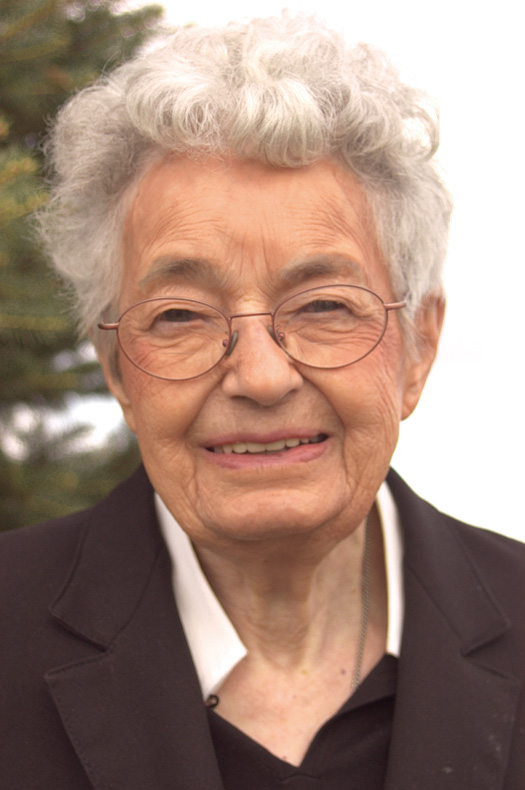
Mildred Ramynke in 2004.


Editor’s Note: The Hon. Mildred Ramynke passed away Sept. 7, 2013 at age 96. To pay tribute to this remarkable woman, we wanted to share this story, which originally appeared in the July/August 2004 issue of
South Dakota Magazine.

Dressed in judge’s-robe black slacks and jacket relieved only with a flash of brilliant coral at the neck, 87-year-old Mildred Ramynke told her story — an incredible story of firsts — as if it was no big deal.

To her, it wasn’t.

Trick roper (she taught herself to twirl three at once), pilot (the only woman in her class), flight instructor (solo again), and finally, judge (you’ve got it — South Dakota’s first woman circuit judge), Ramynke said simply,”I just felt like I was doing what I was supposed to do.”

This tiny woman — though no one mentions her size — tilled a wide furrow across northeastern South Dakota’s legal landscape, winning the affection and respect of those she worked with, those she lived with, and even those she sent to jail.

Chief Justice David Gilbertson, who brought his first cases to Ramynke’s courtroom, said she was the biggest influence on why he became a judge.”I saw the good that she was able to do,” he said, adding that Ramynke resolved disputes as peacefully as she could and still retained the community’s respect for the court system.”I don’t have too many heroes in this life, but she’s one of them.”

It all began on what is now the Standing Rock Sioux Reservation, where her parents, Harrison and Alta, homesteaded. Mildred was their only child, born in 1917. By the time she was walking, she could ride a horse.”Riding horseback was just a way of life,” she said,”especially when we lived West River.”

When Mildred was eight, the family moved to Wisconsin to farm, but they returned to South Dakota after Mildred finished eighth grade. They bought land in the hills of Agency Township on the Sisseton-Wahpeton Sioux Reservation, where they raised livestock in the foothills.

There were no school buses and no car to drive to town, so Mildred lived with her aunts’ families in Watertown while she finished high school. In summers she helped on the farm, putting up hay and riding the fences. And she got involved with Whipple’s Rodeo, five miles down the road.
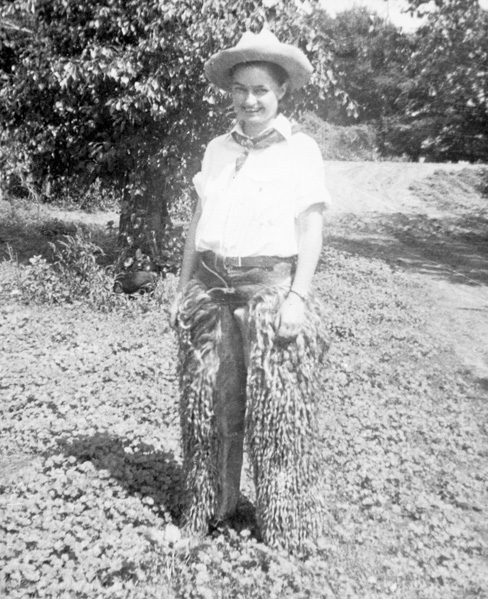
In her youth, Ramynke was a cowgirl and rope artist.

“My dad got together with him, and he did a lot of his promoting and became an announcer for the rodeo,” Ramynke remembered. Nobody planned on her joining the show, but she learned trick roping to make herself useful.

“[Roping] is one of those things you kind of grow up with,” she said. Watching the cowboys, she taught herself to jump in and out and through the spinning rope. She learned the butterfly and how to twirl three ropes at once — one in each hand, the third in her mouth.

But at age five, she had set her sights on law school.”It never dawned on me I’d do anything other than that,” she said.”I wanted to be a lawyer.” The fascination was born when Ramynke’s dad, looking for entertainment on remote Standing Rock, went to town, watched trials, then came home and acted them out.”To me, they were the big heroes, the attorneys,” Ramynke said.

She finished two years of pre-law in Brookings, and three years later, she and Margaret Crane were the first two women to graduate from the University of South Dakota Law School. Both were admitted to the bar in 1939.”There weren’t many people looking for a woman lawyer,” Ramynke said. She took a collections job with the Federal Deposit Insurance Corp., which was trying to sort out where the money had gone when banks closed during the Depression.”It wasn’t interesting,” she said,”but it was work.”

Her posting to Huron was the beginning of another adventure. It was six years before Pearl Harbor, but the Army wanted to train pilots, and began its Civil Pilot Training with ground school and 40 hours of flight instruction. Ramynke had her degree, but Huron College wanted more students in its program, so she learned to fly.”I’d never been off the ground before,” Ramynke remembered.”But I loved it, every minute.”

She earned her private license and took a receptionist job at the airport with the promise of more flight training.”I kind of got used to being the only woman doing things,” she said. That’s also where she met Cliff Ramynke, a flight instructor; they were married in March 1941.

When Cliff landed a job at Iowa Wesleyan University to train men in the Army Air Force, Mildred, with her flight instructor rating, taught young men to fly. She loved working with cadets and learning the maneuvers, including stalls and spins.”We weren’t teaching them to do loops, but whenever we had a little free time, we’d do them just for the fun of it,” she said.

During World War II, Ramynke joined the WAVES, Women Accepted for Military Service.

When Cliff went into the military, Mildred joined the WAVES, Women Accepted for Volunteer Emergency Service, only to be assigned to aerographers school to learn meteorology. She was sent to Washington, D.C. to work in Naval Intelligence, where aerographers used their weather training and Japanese weather reports to try to break the Japanese codes.

At the end of the war, the Ramynkes returned to Roberts County. The couple had three daughters, and Cliff worked with Mildred’s dad raising registered Hereford cattle. In those days, every county had its judge, but the Roberts County judge was elderly. Seeking a replacement, local lawyers came to Ramynke, who hadn’t opened her law books since she left college.”It wasn’t that they thought I’d be so smart or anything,” she remembered.”They just needed a warm body.” Besides, she said, none of the lawyers wanted to give up lucrative probate work to become a part-time judge. She won by a landslide, and took office in 1958. W. R. Brantseg, elected Roberts County states attorney that same year, said he never expected a pushover.”And we soon found out she sure as heck wasn’t.”

In court, Ramynke found her second home. While she handled probate, civil cases and mental illness, juvenile work was her forte. Kids from 10 to 18 came to her court, mostly for burglaries or alcohol violations, but not many violent crimes. Judge Ramynke tried to figure out how to help them.

Ramynke even looked after the ones whose families couldn’t do it, such as a 12-year-old who ended up in Ramynke’s courtroom. The boy’s dad was in jail for drinking when the boy was picked up. His mother’s younger brother, who had a history of trouble, had taken the boy along for a burglary. By the time the boy came to court, his mom was also in jail for drinking.

“It was pretty obvious there wouldn’t be anyplace he could go after he’d been in court,” Ramynke said, so she reluctantly sent him to the Plankinton training school. When no one visited him, she sent him letters. When no one sent him clothes, she did. When he was ready to be released, the parents’ situation had deteriorated, and Ramynke placed him with an aunt.”He turned out OK,” she said, and he still visits her.

“That was the good part about it,” Ramynke said,”getting involved.” In those days, judges had more discretion, she said. People were more concerned with children being treated well and learning right from wrong.”Now there’s more of that put-them-away-and-throw-away-the-key.”
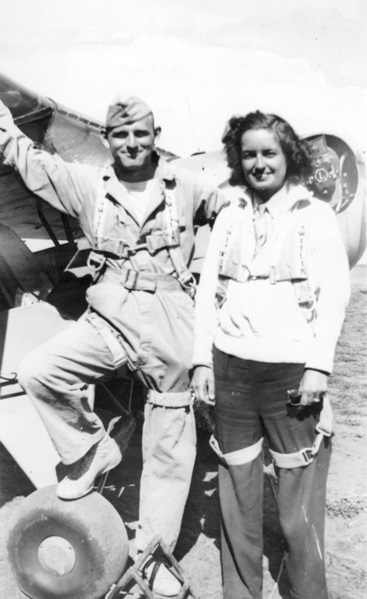
Ramynke posed with one of her students in her flight instructor days.

Brantseg figured he and Ramynke learned the law together.”You learn not only by the books but by doing,” he said, calling Ramynke a good student and exceptionally bright. He’s not alone in saying Ramynke was always willing to listen — to everybody — and that she was fair to everyone, a virtue in a multicultural corner of the state.

Having built a reputation as county judge, a decade later Ramynke became district judge for Roberts, Day, Grant and Marshall counties. In 1974, when voters approved the State Unified Court System, she ran in a field of five judges for four Fifth Circuit Court positions. She came in second, and in 1975 was sworn in as South Dakota’s first woman circuit court judge. The circuit included Aberdeen, Sisseton, Mobridge, Redfield and Faulkton. Ramynke’s new job was full-time.

“She was an honorable judge,” said Long, who was Roberts County Sheriff from 1975 to 2003. He remembered a judge he could visit any time he wanted, one who took more time than most to interview witnesses to understand what was up.

“She’s one of these you can learn a lot from,” said Vivian Hove, who went to the Roberts County Clerk of Courts office just out of high school and later was elected to the office.”She never put herself above other people.” One of the things Hove remembered best was that Ramynke didn’t let anybody take advantage of her. When defendants told outrageous stories — about finding alcohol under a tree or along the road, for example — Ramynke let them know she wasn’t going to buy a lie.”I think that’s why she was so well liked,” Hove said.”She used wisdom, good common sense.”

Gilbertson met Ramynke in 1975, when he returned to Sisseton to practice law. He was still a young prosecutor the day Ramynke stopped court and sternly asked to see him immediately in the back room.”I thought she was angry at me,” Gilbertson remembered. Instead, the judge said,”That kid’s got a gun on him. You can see the bottom of the holster sticking out of his jacket.” Gilbertson figured he could take the gun away, but Ramynke called the sheriff. The deputy agreed to come in the back door; Gilbertson went back in the front. They jumped the boy and found a hunting knife in the holster. Gilbertson credited Ramynke for sentencing the boy only on the original charge, not penalizing him for the crime of stupidly carrying a knife into the courtroom.”She always kept her cool on the bench, was very fair to everybody, very polite,” Gilbertson said.
When she saw alcohol-related crimes, she always tried to include alcohol treatment in the sentence. When she saw kids, she’d try to educate them on where their misdeeds were heading them and what they needed to do to turn their lives around. She’d tell them she had full confidence they could make successes of themselves, and some of those speeches even choked up Gilbertson, who said he wished he could’ve recorded them.

Being a woman had nothing to do with Ramynke’s success, those who encountered her said. She earned respect.

Besides her many firsts, Mildred Ramynke was honored often, including induction into the South Dakota Hall of Fame in 1987. Looking back her life, Ramynke was one of those rare people who have no regrets.”I was fortunate to have opportunities to do all these things, because I enjoyed every minute of it,” she said.”Everything I’ve done I would have done if I didn’t earn a penny.”

Posted on Leave a comment

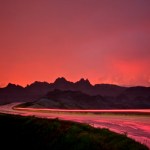
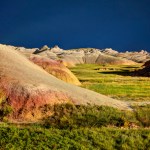
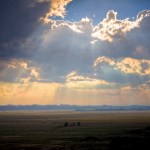
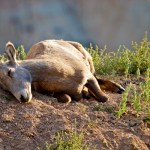
Black Hills Photo Shootout

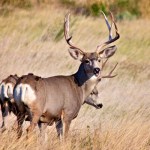
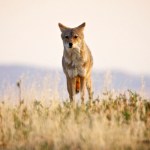
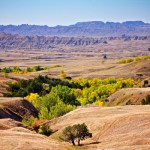
The Black Hills Photo Shootout is a regional photography event offering workshops in landscapes, lightpainting, portraits and more. The fourth annual event will be held September 27 – 29 and it’s open to both amateurs and professionals. Jay Grammond shared these photos from last year’s event. View more of his photos at jgrammondphotography.smugmug.com.