Posted on Leave a comment

Ship in a Bottle

German prisoners of war were put to work harvesting beets on Jack Rathbun’s farm near Nisland.

The war hit home for the Lungrens on a Sunday in December.

“I can remember the Sunday when the Japanese bombed Pearl Harbor,” says Don Lungren of Pierre, who grew up in a German-speaking home near Vale.”We went to church. We came home, and on Sunday, Dad always turned on the radio to hear what the markets were going to be on Monday morning in Sioux City. Most of the time we didn’t have anything to sell, but he had to know what the markets were.”

On that Sunday in 1941, his father tuned in the set, as always; but he might have let it stay on longer than usual.”They were making a lot of noise on that radio, I can remember that — yelling and stuff,” Lungren recalls.”Dad shut it off and he told Mom he was going to see Grandpa.”

Lungren’s father returned with a strict order:”Henceforth, we don’t speak German anymore.”

The attack on Pearl Harbor brought the United States into the war against Japan and its ally, Germany. Perhaps because of the mistreatment of ethnic Germans in the U.S. during World War I, and perhaps because of fears that Japanese and German speakers might be suspected of harboring sympathies with the enemy, the family stopped speaking German then and there.

That Sunday the Lungren children also realized Germans were on the other side of the war. And if they had any doubts that Germans were the adversaries, there was more proof. South Dakota would be one of the places where German prisoners of war were stationed as World War II dragged on.

The first prisoners of war arrived in America in May 1942. Historian Arnold Krammer, who has written extensively about the era, notes that not only Germans but also Italian and Japanese soldiers would spend time in American internment camps before the effort ended in July 1946.

“It is remarkable how many people don’t realize that we held nearly 425,000 German POWs (as well as 53,000 Italian and 5,000 military Japanese prisoners) in some 550 camps across the country. They worked in factories, hospitals and brought in the crops since our boys were overseas fighting in the war,” Krammer told us.

In South Dakota, German POWs ended up in parts of Meade and Butte counties doing fieldwork; in Yankton doing bank stabilization work on the Missouri River; in northeastern South Dakota; and in the Sioux Falls area.

“Every farmer in the valley here used German prisoners for a couple years,” says David Rathbun of Nisland, who was about 9 and 10 at the time his family benefited from POW labor in the fields. His brother Grove, four years older, would drive the truck when they went to fetch prisoners from the Civilian Conservation Corps camp at Orman Dam.

The Rathbuns transported prisoners in their 1937 Ford beet truck. An American guard followed in the family’s Model A pickup.

“It was an old CCC camp in the’30s, and the government turned it into a POW camp. It had machine gun towers and barracks and the whole works, big fence,” Rathbun says.”We’d go up in a truck, get a load of German prisoners, maybe 20 at a time, and haul them back to the farm and they’d work. They had to do so much in a day. I’ll give them credit, they were hard workers.”

During threshing, the German soldiers gathered bundles of barley, oats or wheat into wagons. In that era before combines were common, they also pitched bundles into the threshing machine.

With the sugar beets, the POWs took on many tasks: thinning the beets, hoeing them when they were bigger, pulling them and taking the tops off, loading them on trucks for transport to the railroad, where they were loaded on cars and taken to the factory for processing.

There were also prisoners stationed at nearby Fort Meade. The prisoners came from different sectors of the war, Rathbun recalls.”North Africa was the first ones we got. They came in’43. That’s when we got Rommel’s Afrika Korps prisoners, and they were ornery bastards,” he remembers, referring to the German expeditionary force that fought in Africa under Erwin Rommel, one of Hitler’s favorite generals.”They were the old Nazi type. They stabbed one of their own prisoners, killed him with a butcher knife, up at Orman Dam at the prison camp because he was too friendly with American guards.”

Krammer says such incidents weren’t uncommon, though often concealed by the prisoners.”Almost every camp held a minority of die-hard Nazis who often terrorized the others and sometimes murdered one or two, listing the deaths as suicides.”

The prisoners stayed for growing season, and after harvest were moved to other parts of the country.”They shipped them all out, I don’t know what they did with them,” Rathbun says.”And then in’44, we got prisoners from Normandy. They were just run-of-the-mill German soldiers. They were different. They were damn glad to be out of that war. They didn’t mind working in the beet fields.”

Krammer cites studies saying about 40 percent of German POWs were pro-Nazi. Eight to 10 percent were considered fanatics in their devotion to the Nazi cause, while another 30 percent were”deeply sympathetic.” But just as Rathbun suggested, many of the German POWs were not Nazis.

The prisoners were given small breaks to split up the hours of labor.”Our place had the Belle Fourche River running through it. If they got done early in their work, the guard would let them go swim in the river, and they really liked that,” Rathbun says.

There were even stories that the guard would take a dip with the prisoners now and then.”He did, actually,” Rathbun confirms.”I saw that happen. The guard went swimming and left a sergeant, German sergeant, sitting on the hillside looking for the colonel.”

Locals would often practice German with the prisoners.”There’s a lot of German around here. Our neighbors were Low German, I think, and the prisoners were High German, but they could understand each other. They’d talk all the time.”

Another mode of communication was the universal language of food and drink. Don Lungren recalls that his parents and grandparents, Germans themselves, coaxed extra labor out of the POWs.

“They would make a big 2- or 3-gallon pail of chicken noodle soup, and man, I’ll tell you, they could pick cucumbers twice as fast. And Grandpa, he made better than that. His bribe was that if they would look at the end of the trees, by the hog house, there would be some beer there if they would get those cucumbers picked today. They had them done by noon, I think.”

After long days in the Butte County beet fields, prisoners sometimes enjoyed a swim in the Belle Fourche River.

Lungren said other locals would do favors for the POWs.”My family and most of the German families always gave them a treat — chicken noodle soup from the old roosters and that sort of thing and beer at the end of the grove in the trees. The guard would come. Grandpa would loan the guard his shotgun and the guard could go shoot pheasants. And because the guard couldn’t get the pheasants home, I suppose Grandma cooked the pheasants and fed them to the prisoners.”

Sometimes the farmers got more than they asked.”Grandma told one of the prisoners she wanted some little cucumbers because she wanted to make baby dills,” Lungren said. His grandmother had business to tend to, but when she got back to the field, the Germans had picked two bushels of tiny cucumbers — far more than she needed.”We had baby dills for years.”

Marian Ruff added that for German-speaking families, even though many of them had immigrated to America from German communities in Russia, it was awkward having German POWs work in the fields.

“My family, like the other German families, was looked down on because of the war — because they were Germans,” she said.”With the POWs, I think we felt sorry for them because of the way they were treated. They would bring this truckload of guys out to the Vale area and they would have two armed soldiers with them with rifles in case they tried to escape. They were supposed to shoot them.”

The guards weren’t just for show, Krammer says.

“There were escapes aplenty, but most were caught within three days,” he notes. But, he adds that many prisoners quickly figured out they would be treated decently in America.

“Those assigned to American farms were well-treated and modern flea markets still have POW-made handicrafts which they gave to the children of farm families,” Krammer said.

That was the case in South Dakota, too, Marian Ruff said.”They were just really happy to get out of the prison situation and do something. Several of them put together some ships inside of wine bottles. We have one of those. One was given to my grandpa. Several of the families that these prisoners worked for ended up with one of these ships inside of a bottle. It always fascinated me because I had no idea how they did it. Someone said to me recently, ëWell, they sawed the bottom of the bottle and put the ship in and sealed the bottom back on again,’ but I don’t know if that’s what they really did or not.”

And no one knows what it meant to a German soldier, either — building a ship inside a bottle in a prison camp to give to a German farmer in landlocked South Dakota.

David Ruff of Spearfish, Marian’s husband, grew up near Nisland during the war. He spoke German well enough to understand the German POWs who worked for his father and some of the neighbors.

The Rathbun family dog often provided canine companionship for Germans working the fields.

“I often wondered if they didn’t have feelings knowing that they were in a country so far from their homeland and had people there that could speak their language. I think many of the prisoners were quite pleased to find that there were German-speaking people here. They were appreciative of the extra food that was given them and the friendliness of the farmers that they worked for.

“I don’t know if I personally asked one of them or what, but somehow or another in conversation, I learned from them that they were quite pleased with the treatment they were receiving here. I’m not sure exactly where they became prisoners of war, but they mentioned that when they were in France, they were required to drink out of the troughs that the livestock drank out of.”

POWs also made an impact on the other side of the state. Yankton-area historians Lois Varvel and Kathy K. Grow reflected on the German POWs stationed in Yankton in their 2001 book, The Bridge We Built: The Story of Yankton’s Meridian Bridge. They noted that the Yankton Press & Dakotan reported on April 3, 1945, the arrival of the first contingent of German POWs from the Afrika Korps to take part in Missouri River bank protection work. Officials wouldn’t tell the newspaper how many German POWs would come to Yankton, citing policy on POWs, but the newspaper understood they would make up”a sizable force.”

The POWs worked on a project to make sure the main flow of the Missouri River steered clear of the city of Yankton’s water intake. The work had side benefits for the Meridian Bridge.”We had prisoners of war trucked in from Algona, Iowa, and they did revetment work on the Nebraska shoreline. That was their contribution to protecting the Meridian Bridge,” Varvel says.

After the war ended, most of the 375,000 German POWs went back to Germany — but not all stayed there. Some liked what they had seen of life in America. The United States didn’t track the number of former German POWs who ended up immigrating to the land of their captivity; but it was substantial. Krammer notes that John Schroer, a former POW who immigrated to America after being held as a POW in Alabama, estimated about 5,000 POWs made a similar move. Some reportedly returned to South Dakota, too, where the enemy they had fought showed them decency and kindness in victory.

Editor’s Note: The tally of German prisoners of war in South Dakota at any one time during World War II was a floating figure because they rotated in and out of different states depending on the local harvest and other demands. Curt Nickisch, a South Dakota Public Broadcasting journalist at the time, wrote a story for South Dakota Magazine in 2001 in which he reported the number at more than 1,200 POWs through 1944 and 1945. There are also several books available, including Nazi Prisoners of War in America by Arnold Krammer. This story is revised from the March/April 2018 issue of South Dakota Magazine. To order a copy or to subscribe, call (800) 456-5117.

Posted on Leave a comment

Retracing Roads to Our Round Barns

A barn-like pavilion is the centerpiece of the two-county fairgrounds near Nisland.

South Dakota Magazine staffers crisscrossed South Dakota 25 years ago in search of that rare architectural treasure — the round barn.

With help from the State Historical Society, we eventually found 29. They included livestock sales barns, the Butte-Lawrence county fairgrounds pavilion, two octagonal machine sheds and a charming, vertical-log barn near Sturgis. South Dakota never had many round barns, so forgive us for loosely interpreting the term.

We also learned that circular barn construction dates at least to the Bronze Age (hundreds of years B.C.), when boulders were used not just for castles in Britain but also for barns.

George Washington was among the first American farmers to build a barn in the round. A reconstruction of his original 16-sided barn, based on the first president’s own drawings, is a popular attraction at Mount Vernon.

The Shakers were the first Americans to experiment with round construction. A Shaker stone barn built at Hancock, Massachusetts, in 1824 is among the country’s oldest.

There’s just something about roundness. Eric Sloane, author of An Age of Barns, wrote,”Farmers made circular designs on their barns and their wives sewed circular patterns on quilts. They took delight in round hats, rugs and boxes, and they made round drawer pulls and hand rests for their severely-angled furniture.”

Anton Anfinson, a contractor from Wakonda, promoted the round barn concept in southeast South Dakota. Anfinson believed a round barn was the most efficient way to feed cattle. Many round barns featured a silo or a hole in the hay mow at the center. Livestock stood with their heads to the center at feeding or milking time, making it easier to feed the animals and clean their waste.

Most farmers who constructed round barns must have believed in Anfinson’s economic theory, but it’s likely that they were also intrigued by the thought of having something out of the ordinary.

They got what they bargained for. During our 1990s search, we found that if we got within 10 miles of a round barn and asked for help, somebody would soon have directions. Any well-kept old barn gets people’s attention, but a round barn becomes a neighborhood landmark.

“A man’s barn bespoke his worth as a man,” wrote Bob Lacy in a foreword to his book, Barn.”It expressed his earthly aspirations and symbolized the substance of his legacy to his children.”

Rural historians estimate that fewer than 3,000 round barns existed in North America, and most were built in Canada. South Dakota never had more than three or four dozen.

Twenty-five years ago, it was heartening to learn that someone cared about nearly every round barn we discovered. Over the past year, we retraced our travels and found that most of those barns still stand. Following are stories about the barns and the people who care for them in the 21st century.

Watertown

The Corson Emminger barn south of Watertown along Highway 81.

East River’s most visible round barn stands just south of Watertown along U.S. Highway 81. Corson Emminger came to South Dakota in 1905 from Wisconsin, where round barns were popular with dairy farmers, and built the 50-foot diameter barn with concrete blocks in 1910. He added an attractive cupola for good measure. The barn served as a milking parlor for decades. Today, the Emminger barn is missing a few shingles but it remains in good shape thanks to the Moeller family, its longtime owners.

1880 Town

West River’s most prominent round barn serves as a grand entry to the Hullinger family’s 1880 Town, a pioneer village located 22 miles west of Murdo along Interstate 90. Richard Hullinger remembers the day they moved the 14-sided barn from a ranch near Draper, about 45 miles away.”We came across the country on a ridge, and we had to do a little dirt work on the draws to make the crossings.” Built in 1919, before the invention of power tools, the barn’s symmetrical roof is high art to anyone who ever handled a handsaw or hammer.

Mission Hill

Norman Nelsen would be pleased to see the place he named New Hope Farm more than a century ago. Nelsen was a man who appreciated detail. He kept a journal of the materials and costs when he built an octagonal barn in 1913 as a machinery shed.”He recorded how many nails and how many boards he used, and he kept track of the costs,” says his great-grandson Chris Nelsen, who now lives on the farm, northwest of Mission Hill, with his wife Cindy and their children.”You can still see the hooks in the round barn where he hung the longest ears of corn to dry,” Nelsen says.”It was his method of doing natural seed selection.”

In 1914, Norman built a traditional rectangular barn just a stone’s throw to the west. Today, calves and sheep enjoy the big barn, and the smaller one is still used for storage. Chris and Cindy tend fastidiously to both barns — they plan to re-shingle the round barn and they recently sided and roofed the big barn, where letters atop the main door read NEW HOPE FARM.

Sioux Falls

The Shafer family has tended to a round barn on the northeast edge of Sioux Falls for many years. The barn was built of hollow block in 1919-20 by bankers Art Winters and Ray Stevens, who liked the round concept for cattle feeding. They installed a nearby scale and operated the farm like a stockyard.

However, the feeder cattle created too much moisture in the winter months, causing thick layers of ice to collect on the walls. The bankers eventually abandoned their operation and sold the barn to the Shafer family, which owns it today. For years, they operated a dairy in the barn; today it’s mostly used for storage.

Ron Hodne says Lawrence Welk and his band entertained in the round barn.

Winfred

Lawrence Welk and his band played a few songs at a dance in the Hodne family’s big round barn southwest of Madison near the little town of Winfred. Entertaining seems to fit the Hodne family, which now operates a big hunting lodge affectionately called Hodneville (officially the Bird’s Nest) within shotgun range of the barn.

The 80-foot diameter barn was built for beef cattle in 1918. Ron Hodne’s parents bought the place in 1946 and today he lives nearby with his wife, Ev. They and three sons — Brad, Brian and Brandon — run the lodge, which can accommodate 50 overnight guests.

A few years ago, Hodne asked his sons if they thought the barn was worth preserving because it needed a $40,000 roof.”They said, ‘Do it,'” he says.

The family has used the round barn for just about everything you can raise in South Dakota — cattle, hogs and chickens.”We even tried artichokes,” Hodne jokes. It’s empty today, except for a farm cat, but he and his family may eventually find a way to incorporate it into the lodge.

Draper

The Freier barn near Draper was built from a pre-cut mail order kit, possibly from the Gordon Van Tine Company of Davenport, Iowa. It was used as a sheep barn for decades.

Renner

Blocks for a round barn on the northern outskirts of Renner were made from sand and gravel collected at a nearby pit in 1917. The Sorum family has owned the barn for generations. They used it as a dairy for many years, but in recent decades it has served as a horse stable and a cat paradise.

Gettysburg

South Dakota’s largest round barn is on the Sloat farm north of Gettysburg. Measuring 100 feet in diameter, the wood-frame structure is used for swine, beef and dairy.

Sturgis

A barn of vertical pine logs stands in Bulldog Gulch near Sturgis.

South Dakota’s only round barn made of logs lies in Bulldog Gulch, just south of the Black Hills National Cemetery near Sturgis. It was built of pine logs, stood vertically on a circular concrete footing, in about 1941 by the Blairs, a prominent pioneer ranching family.

Dick and Lonna Morkert removed 2 feet of cattle manure when they bought the barn 30 years ago. Once cleaned, they found the barn was perfect for their four horses. Lonna, who then worked at a clinic in Sturgis, met the man who cut the logs.”He was an old-timer who was known for his mules,” she says.”The Blairs gave him the job of cutting the trees. He said he skidded them down from the mountain just to the west.”

Bulldog Gulch has a rich history. The 1874 Custer Expedition stopped there and watered horses at the same creek that the Morkert horses enjoy. Some think the gulch was named for Madame Bulldog, who ran a saloon there.

The Blairs arrived in 1907. They raised registered Hereford cattle and held bull sales at the log barn in the early 1940s. Dick Morkert says old-timers remembered that bidders sat on long benches.

Weddings are sometimes celebrated at the No Name City campground, which borders the Morkerts’ barn and corrals. On a few occasions, a bride with good taste in architecture will ask to have a picture taken by the very clean log barn.

A round barn is among the collection of 14 old agricultural buildings at the Little Village Farm near Trent.

Trent

When the Big Sioux River threatened a century-old round barn near Trent in the 1990s, the landowners called Jim Lacey and said,”You need that barn!”

Lacey agreed, but moving round barns is not easy because they lack the floor beams of rectangular structures. Still, the Beckers of Marion agreed to move it with Lacey’s help, and together they brought it out of the river valley and onto what’s now known as Little Village Farm, a collection of 14 old agricultural buildings.

The village’s only other round barn is a brooder house.”It was a prefab job, probably sold by Sears or Wards,” Lacey says.”You put it together just like the old redwood water tanks, with steel bands. Tenant farmers could buy one, and then take it with them if they moved from one farm to another.” If the chickens dirtied a spot, the farmer simply pulled the brooder house to an area with fresh grass.

Jim and Joan Lacey welcome guests to their Little Village Farm, located west of Trent in Moody County. The buildings are full of farm and ranch machinery, tools and collectibles, including more than 6,000 farm caps. There is a small admission fee.

Zell

Twin 12-sided round barns sit in a horse pasture on the northeast corner of Zell, a small village west of Redfield on Highway 212. Zell was named by Benedictine sisters who built a wood monastery there in 1886 which is also standing, though showing its age.

Unityville

A big tile barn once stood just west of a little town with the fine name of Unityville in McCook County. The town was christened as Stark when it was founded in 1907, but when officials learned that there was already a Stark in North Dakota they unified around the new name. The landmark round barn was built in 1921. Unfortunately, Unityville is all but gone, the farmstead is now a cornfield and only the barn’s silo is now standing. Life is stark in Unityville.

Potter County

A 20-sided hog house built by John Nold in 1903 may be the first round barn built in South Dakota, according to a 1995 study by the South Dakota State Historical Society.

Nisland

The entire Butte-Lawrence County Fairgrounds is on the National Registry of Historic Places. Its jewel is the round pavilion.

Buried in the cottonwood and oak forest of the Belle Fourche River valley lies one of America’s truly unique county fairgrounds, and its centerpiece is a century-old, octagon pavilion.

The forested 40-acre site is a mile west of Nisland in Butte County, which has shared a county fair with Lawrence County since 1980. And who wouldn’t want to share such fairgrounds?

The white-washed buildings include two long, rectangular barracks that housed German POWs during World War II. The prisoners helped farmers with the sugar beet harvest. Big-branched cottonwoods shade the buildings and grass. The entire fairgrounds are on the National Registry of Historic Places, but the pine jewel is the round pavilion. President Calvin Coolidge attended the fair and was pictured at the pavilion when he vacationed in the Black Hills in 1927.

The sturdy structure survived several calamities, including a 2012 windstorm that damaged the roof and windows. The two counties and their fair board invested nearly $300,000 in repairs and updates. Officials hope to find ways to use the pavilion throughout the year — maybe for weddings and family reunions — to garner income for future expenses.

The fair is held the first weekend of August, a week before the Sturgis Motorcycle Rally. Area 4-Hers exhibit crafts, garden produce and other projects on the main floor and a second story balcony of the pavilion. REA co-ops host a free barbecue. Boys and girls show their livestock and compete in catch-the-sheep and dress-a-rabbit contests. At sunset, animals sleep in the barns as country music wafts to the high ceiling of the pavilion.

Admission is free at the fair, perhaps because the atmosphere is priceless.

Editor’s Note: This story is revised from the January/February 2020 issue of South Dakota Magazine. To order a copy or to subscribe, call (800) 456-5117.

Posted on Leave a comment

South Dakota’s Sledding Hills

Local youth take to their sleds at Yankton’s Morgen Park. Photo by Bernie Hunhoff.

South Dakota’s reputation for geographic diversity holds true when it comes to snow sledding. Some of our eastern cities are too flat, and the slopes in some of our mountain towns are too rugged, steep and rocky.

In Aberdeen, where the terrain has been described as”flat as a barn door,” city leaders manufactured a 25′ hill so kids could enjoy winter. However, we discovered that most communities have a natural hill that becomes a hot spot when it snows.

Pack your sleds as you travel this winter because there are plenty of hills to explore. Most of the snow hills are unsupervised, so adults should be ready to act if they see something dangerous — a heavy toboggan sled, for example, that could carom out of control and hurt someone, or a motorized vehicle on the slopes. Sledding has long been a favorite winter tradition, even for our flatland friends. Let’s keep it alive.

Here’s our list of city slopes. Tell us what we’re missing. We’d also like to know where to find the closest and richest hot chocolate after a day on the slopes.

ABERDEEN — God created most of South Dakota’s hills and mountains, but man assisted with the modest slope in Baird Park (1715 24th Avenue NE), the most popular sledding spot in the Hub City. City officials created the gentle 25-foot just for kids.

BELLE FOURCHE — Slopes behind the Tri-State Museum (415 5th Avenue) are a favorite, though they may be too fast for younger kids and there is a walking path at the foot of the hill so watch for pedestrians.

CUSTER — Pageant Hill has been touted as one of the finest family sledding spots in the Black Hills. It may be too steep and long for younger kids, but you don’t have to descend from the very top. The hill is the summit of beautiful Big Rock Park, which also includes hiking trails and a disc golf course. It rises above the city’s south side.

HOT SPRINGS — Southern Hills Golf Course (1130 Clubhouse Drive) is fun and scenic.

HURON — Toboggan Hill (6th Street & Lawnridge Avenue), aka Slide Hill, is a bluff above the Jim River valley on Huron’s east side.

LEMMON — The ever-resourceful people of Lemmon discovered years ago that it was less expensive to build a small hill for their new water storage rather than just build a taller tower. Then someone got the great idea or also making it into a sledding slope with a warming shack. Tank Hill is quite easy to spot on the city’s west side. Many years ago, when the water tower developed a leak during a cold spell, kids were able to slide on the ice flow all the way downtown.

PIERRE — The slopes above the soccer fields in Hilger’s Gulch are popular. The gulch is a scenic valley just north of the State Capitol building.

RAPID CITY — Meadowbrook School Hill (3125 W. Flormann Street) is a good spot, as well as the Civic Center hill that rises above the Holiday Inn Rushmore Plaza parking lot downtown.

SIOUX FALLS — Tuthill Park in southeast Sioux Falls is the site of weddings and parties in the summer months, but when the snow falls it becomes the domain of well-bundled children with sleds. Spellerberg Park (2299 W. 22nd Street), closer to the city center, also has a fair slope. Great Bear Ski Valley welcomes snow tubers, who get to ride the ski lifts.

SPEARFISH — Hills behind the Donald E. Young Center on the Black Hills State University campus are fast and fun.

STURGIS — Lions Club Park (off Lazelle Street) is a good place for younger kids, and Strong Field Hill on Ballpark Road is fun for older youth.

WATERTOWN — St. Ann’s Hill, a sledder’s delight, is so named because St. Ann’s was the original name of the nearby Prairie Lakes Hospital. Take Highway 20 to 10th Avenue and turn uphill.

WESSINGTON SPRINGS — It’s worth a drive to experience Ski Hill on the west edge of Wessington Springs. The natural setting in the Wessington Hills is idyllic, but the real attraction is an old, homemade invention with an electric motor that powers a 1,200-foot rope lift. Jokingly called the”Rube Goldberg ski lift,” the simple equipment has been lovingly cared for by handy volunteers, including Lloyd Marken, 85, who helped to build it in 1956.

YANKTON — Morgen Park (1200 Green Street) is the go-to sledding hill in town, however kids also like to slide down the earthen slope of Gavins Point Dam, where it rises above Pierson Ranch Recreation Area west of Yankton.

Posted on Leave a comment

West River Oasis

“Cattle for respect, sheep to pay the bills,” goes an old West River axiom. It was probably coined by a sheep man at Newell, where weekly sales are held every Thursday. The annual show and sale dates back to the 1940s. Photo by Greg Latza.

If you consider the Black Hills home, maybe you’ve got a soft spot in your heart for Newell. Perhaps you’ve returned home across the prairies via Highway 212, from points north and east, and have spotted this town with Bear Butte as its backdrop, and with the Black Hills defining its southern and western horizons.

“Almost home,” you’ve said to yourself.

Not quite. Despite its proximity to the Hills, Newell claims a separate history. It came into being more than 30 years after Rapid City, Sturgis, Spearfish, Deadwood and Lead were founded. Frederick Newell, a U.S. Bureau of Reclamation chief engineer, inspired the name. In 1902 President Theodore Roosevelt had established the Bureau of Reclamation in hopes of transforming dry western expanses into fields of crops. Among the Bureau’s first projects was damming Owl Creek in Butte County, creating one of the world’s largest earthen dams, 6,262 feet long and 122 feet high. Water would be diverted from the Belle Fourche River into the reservoir, and there would be more than 500 miles of irrigation canals and laterals channeling this water to virgin croplands. The Newell town site sat in the middle of some of the most promising countryside. As the dam progressed, this land sold for as much as $25 an acre, a price most South Dakotans considered sky high.

In 1907 the Bureau of Reclamation developed an”Experiment Farm” at the town site. The farm would research crops best suited for local soils, and later it would train young people who were interested in agriculture. The year 1910 saw the dam’s completion and construction begin for Newell’s first homes and businesses.

Churches went up too. Father Wenzel Sobolewski served multiple Catholic churches and sometimes faced frontier-like conditions in traveling from one to another. On foot outside Newell in 1916 or 1917, he found himself in danger of freezing, desperately lost in a blinding blizzard. But, he later recalled,”God was with me and guided me to a barn, where I found myself draped around the neck of a cow.”

Karen Swan and her associates at K-J Leather Company sew chaps, saddlebags, chinks and other tack for working cowboys.

In Newell’s early years there were always outside critics who considered the land there best suited for such cows, even though good crops of corn and grain were growing, along with produce entirely new to the region: cucumbers, pinto beans and sugar beets. But, some observers wondered, were those products worth all the government expense — more than $2 million for the dam’s construction alone? In the 1920s, when farm profits were down everywhere, and in the 1930s when more dust than water filled the reservoir, the criticism seemed valid. Then the rains returned. By the late 1940s local farmers were enjoying banner years and were in a position to manage and maintain the irrigation system themselves, rather than watching the government run it. In 1948 landowners formed a board of directors and made Newell irrigation district headquarters. Today corn and alfalfa dominate the 57,000 irrigated acres, and there are fields of wheat and oats. To the delight of loyal aficionados, the Newell area is also known for honey derived from clover.

Not only is water from the irrigation system the area’s lifeblood, but irrigation has always been central to Newell’s identity. When Black Hills high school athletes say they’re heading north to play the Newell ‘Gators, South Dakotans know the team name doesn’t refer to a big reptile.

Step into TJ’s Cafe and Waterin’ Hole to meet Neil Vollmer and Ken Wetz for coffee, and you’re guaranteed some funny stories and Newell area history. But mostly these men are focused on contemporary life and future opportunities. Vollmer owns an insurance business and is president of the Newell Economic Development Corporation. Wetz, manager of the Butte Electric Cooperative, is a former mayor and state legislator, and along with Vollmer, a driving force behind the development corporation for its entire 15-year history. Thanks to that organization’s volunteer work, Newell got behind a successful effort to re-open its grocery store after it closed for about a year in the 1990s. The group has also recruited industry. Aker Woods Company, a Black Hills company manufacturing items ranging from roof beams to classroom products, needed a milling and cutting site, and Newell got the nod.”It was the quickest community to have a place for us, and the most welcoming,” says owner Alan Aker. The friendly attitude also won over K-J Leathers, which moved into a downtown building to manufacture high-quality chaps, chinks, saddlebags and tack. Rodeo competitors and working cowboys and cowgirls throughout the West know K-J Leather products well.

Newell’s community leaders have aggressively recruited small industry, and the resulting jobs have kept the town’s population stable at about 650, bucking rural trends.

A Newell industry that predates the economic development corporation is Boom Concrete. Founded by Newell native Craig Van Der Boom in 1964, the company earned a reputation for its cement stave silos sold across South Dakota. Now Craig’s son, Troy, runs the company, well respected today for its virtually indestructible picnic tables and rock-exterior restrooms found at South Dakota’s state parks and recreation areas.

Other businesses and services that are key employers include the school district, Butte Electric Cooperative and the irrigation district. Residents have always commuted into Black Hills communities for work, too. Positions at Fort Meade Veterans Administration Hospital, 25 minutes down Highway 79, are especially attractive. Newell’s population is about 650, and Vollmer and Wetz say that figure has held pretty steady over the past 20 years.

Summer visitors pass through town for boating and fishing at the reservoir. There’s little evidence that irrigation boosters 100 years ago saw much potential for recreation on the waters, but it’s been a huge economic boost over the years. People ask for directions to Orman, always the dam’s unofficial and locally preferred name; it refers to a Colorado contractor who got the original bid for the big government project. Officially the name remains Belle Fourche Dam.

Newell has always been able to attract area farmers and ranchers looking to retire in town. Once in a while someone from far away — drawn to Orman for boating, perhaps, or just driving down highways 212 or 79 — decides to make Newell home, too.”They’re people looking for a laid-back way of life and for safety,” Vollmer says.

“What attracts them in the summertime is our green lawns and gardens, and our trees,” adds Wetz.”Because of the irrigation district, we look a little different than some towns in western South Dakota.”

Newell homeowners can access irrigation waters, piped through town, for just $3 a month. One retired rancher told Wetz he spent his whole life”trying to grow grass on the prairie, and now I have to mow the damn stuff.”

One of Newell’s most pleasant amenities is its nine-hole golf course, on the town’s north side. Irrigation waters have been put to creative use; golfers tee off and putt alongside the waters of a small dam. Writing a town history for Newell’s centennial in 2010, Wetz was surprised to learn that golfers have played at that spot since 1910.”We were golfing before we had electricity,” he observes.

Fall is a busy time in Newell, beginning with a Labor Day celebration that’s featured a rodeo the past 55 years. It may be the world’s only rodeo to showcase sheep tipis. As veteran sheep producers know, a tipi in their industry is a tent that shelters a ewe and new lamb in case of bad weather on the prairie, or forces ewe and lamb togetherness when a ewe rejects her lamb. The timed rodeo event involves teams of two people, one who erects the tipi and the other who collects the animals and gets them into the tent.

“We call our rodeo the sheep tipi-ing world’s championship,” Vollmer says.

The Newell Ram Show attracts ranchers from four states. Photo by Greg Latza.

In some ways Labor Day feels like a warm-up for the big Newell Ram Show and Sale, always held the third Friday in September. First organized by community leaders in 1946, the event has succeeded in meeting its original goal: improving sheep flocks in South Dakota and neighboring states by making the best breeding stock available close to home. Consignors show up with high quality stud rams, registered ewes and purebred range rams. Area sheep producers say the show and sale has helped them remain nationally competitive over the years, as they’ve faced fluctuating prices, foreign wool competition and more artificial fibers.

Big as Labor Day and the Ram Show and Sale are, a series of more spontaneous events epitomize Newell. The next time you’re headed to the Hills on Highway 212 and you come upon the town, roll down your windows and sniff the air for pancakes. It’s possible that Newell holds the world’s record for dollars raised per capita by pancakes. Anytime there’s a serious illness or accident involving Newell residents, you can count on the Lions Club to stage a free will donation pancake supper. You can also count on seeing the omnipresent Vollmer and Wetz flipping the cakes. There are big pancake dollars behind a community ambulance, and behind the building that houses the ambulance.

“Those suppers have been happening for years,” Vollmer says,”and people keep coming, responding to whatever need Newell has.”

Editor’s Note: This story is revised from the January/February 2011 issue of South Dakota Magazine. To order a copy or to subscribe, call (800) 456-5117.

Posted on Leave a comment

An Irrigated Valley

Our September/October issue includes a feature on the Belle Fourche River valley. Butte County is a West River oasis, thanks to the Belle Fourche Irrigation District, a century-old project that can be traced back to 1885. Bernie Hunhoff took several photos in the area last summer while working on the story. Here are some that didn’t make the magazine.

Posted on Leave a comment

The Hoover Store

Hoover Store is the only business for several miles in Butte County.

When Jim and Leona McFarland bought a Butte County ranch in 1976, they found that it came with an old general store that was closed.”We had a couple of teenage daughters who were interested in opening it up so we did,” says Leona. The neighbors were appreciative; the next place to buy milk or eggs is 33 miles down the road.

Gas, sandwiches, salt blocks and other necessities for man, cattle and sheep are the store’s mainstays, but”beer is number one by far,” laughs Leona. Built of wood in 1902, the store still looks like a western movie set. Some evenings, cowboys and hunters play 10-point pitch around a wide card table.

Castle Rock Fire Department — which has no fire station, and parks its trucks on ranches — holds a Texas Hold’em fundraiser tournament every December. Grass and forest fires ignited by bolts of lightning are the biggest challenge for firefighters.

The store is a popular gathering place for local ranchers.

Hoover is along Highway 79, near Custer National Forest. Sixteen miles south of town is Castle Rock, a large sandstone butte that appears from a distance like a medieval palace. Tourists and bikers straggle in throughout the year, and hunters arrive in the autumn to look for deer, antelope and turkey. Some hang their trophy mounts in the store beside the McFarland collection of cowboy memorabilia, fossils, arrowheads and a picture of two big bull snakes in a mating pose.

Ranch families are the store’s bread and butter. Some buy nearly all their groceries at Hoover. Leona McFarland says the ranchers are unique.”They’ve had to be tough to stay in it with cattle and sheep. They’re just a very strong type of person, and yet they are good neighbors even if they live far apart. If anybody needs anything, everybody is there to help.”

Running a one-store town is probably as difficult as ranching, and Leona has been doing it alone since her husband died three years ago. But her daughter, Jean, and Jean’s husband Jerry McNulty are moving home this summer to help. Hoover’s population is about to triple.

Editor’s Note: This story is revised from the July/August 2013 issue of South Dakota Magazine. To order a copy or to subscribe, call (800) 456-5117.

Posted on Leave a comment

West River’s Fleeting Fall Color

The colors of fall can be elusive in a predominantly prairie state like South Dakota. Our national forests are mostly made up of evergreens. Autumn winds can blow relentlessly through the rest of the trees as winter’s long arm begins to creep down from the north. Wild weather swings, as evidenced by this past week’s brutal snowstorm on the west side of the state and tornados clipping the southeast corner, don’t help autumn’s splendor stay around for long either. To me, fall’s fleeting nature is what makes photographing its beauty so fun and fulfilling.

This year, I was able to break away from the normal routine to spend a few days searching for autumn color. From Sunday, September 29 through Tuesday, October 1, I made a wide circle through some of the prettiest country our state has to offer west of the Missouri. Last year, I discovered that the valleys and draws of the Sage Creek Wilderness offer some unique fall scenes with the Badlands as a backdrop. I got there maybe a week before the trees were in prime color, however, I found that the early morning sun backlighting the leaves brought out fall’s tints anyway.

My next stop was the northern Black Hills. This area contains two of the most scenic canyons in the state and they are particularly beautiful when dressed in autumn’s hues. Vanocker Canyon Road between Nemo and Sturgis is a short but beautiful drive. Spearfish Canyon’s scenic highway is also a must see during this season. At Savoy, you can get out and hike to waterfalls, alongside creeks and nature areas that will take your breath away.

Around a hundred miles north and a little east of the Black Hills is the furthest eastward unit of Custer National Forest. This narrow band of trees grace the tops and sides of the Slim Buttes of Harding County. I have seen and been impressed with other photographers’ images of that area taken in the fall and always wanted to go and experience it myself. I’m glad I did, as there are views and vistas that had me saying”wow” out loud. I’m not kidding. After only allowing for an afternoon’s visit, I was kicking myself for not allowing the whole weekend to explore. It’s that good.

On the way to the Slim Buttes, I stopped off in the Hoover, SD area to shoot the South Fork of the Moreau River. I grew up near the Moreau River proper around 90 miles to the east of Hoover so this landscape of cut banks, cottonwoods and cattle made me feel like I was home again. After spending the night in Isabel, I made an early morning stop at Little Moreau Recreation Area south of Timber Lake. This relatively wide and scenic creek valley in the middle of the prairie is thick with trees. I had never witnessed what it looked like in the fall before this year. The early morning view was not a disappointment. I had arrived a few days before prime colors, but the scene was still impressive. As a photographer, I’d rather catch fall early than late as the remaining greens can contrast nicely with the autumn’s yellow, oranges and reds.

My last stop was the Foster Bay Road of extreme northwest Stanley County. Here the draws were in full autumn splendor. I found bright reds in the thickets and rich oranges and yellows along the hillsides. I spent a good hour, just taking it all in. A lot of miles lay behind me, but viewing these last bursts of color before the dull and muted hues of winter arrive was truly a blessing. Yes, fall is fleeting in our great state, which means catching it even for just for a moment is a treasure. It’s a good life lesson, really. Life is fleeting, but there are moments and experiences that stand out in vivid color. Enjoy those moments, take pictures and treasure the views!


Christian Begeman grew up in Isabel and now lives in Sioux Falls. When he’s not working at Midcontinent Communications he is often on the road photographing our prettiest spots around the state. Follow Begeman on his blog.

Posted on Leave a comment

Sage Grouse: Living on the Edge

Last Friday, I knocked off work an hour early and headed west with my camera. The weather outside finally agreed with the calendar — a warm breeze accompanied me as I made my way through the Badlands during the sunset hour. Driving with my windows down, I could smell the water from the snowmelt mixed with new grass growth on the breeze. It was a little bit of heaven on earth. But the Badlands weren’t my final destination. I was headed for the farther reaches of western South Dakota on the hunt for a special kind of bird.

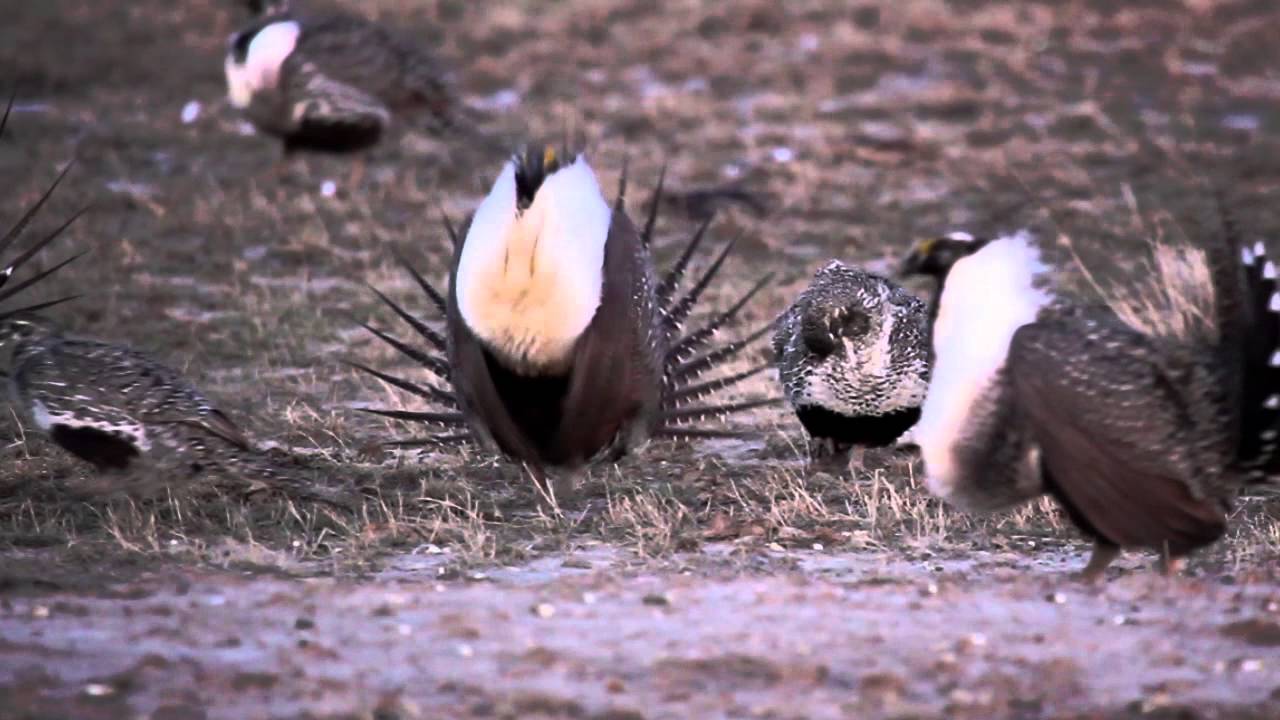
On Saturday, I woke up at a hotel in Spearfish, ten minutes before my alarm was set to go off. Instead of my normal bleary-eyed, anti-morning mood, I was wide awake and ready to experience one of South Dakota’s lesser-known treasures. The Greater Sage Grouse were dancing in Butte and Harding counties and I was going to get to watch!

Chuck Berdan, a retired biologist for the Bureau of Land Management, agreed to show me an active lek in Butte County, but to get there without disturbing the birds we had to leave Belle Fourche at 4:30 a.m. I peppered Chuck the whole way there with questions about the birds, his job and the land. He answered patiently and with good humor. I learned that there are somewhere between 1,000 and 1,500 sage grouse in South Dakota. The courtships on various leks start in late March and usually taper off by early May. Chuck told me that male sage grouse roost on the lek at night, unlike prairie chicken and sharptail grouse, who fly in to their leks in the morning.

The numbers of South Dakota sage grouse are in a slow decline both here as well as in other western states. The latest trial for the bird has been the West Nile virus. If a sage grouse contracts the virus, they usually only survive for two or three days. This relatively quick death has not allowed for much immunity to build up in the grouse population. It is a worrisome situation as our state’s population of grouse are already on living on the edge. Our birds live on the easternmost edge of the sage grouse’s naturally fragmented range, so it doesn’t take much to tip the scales against them.

Chuck has spent 30+ years studying sage grouse. He told me that counting and studying the bird here in South Dakota allows wildlife management to make plans and policies based on local data rather than from studies done in other states. I asked him if he could predict what the grouse population would be in 10 or even 20 years. He smiled and told me that more studies need to be done to answer those kinds of questions. Right now there are simply too many unknown factors in play to be able to predict the future of sage grouse with any certainty.

I feel lucky to have been able to witness the display. I didn’t even know we had the species in the state until I watched an episode of Planet Earth where they featured the bird’s mating dance that was shot in Wyoming. It’s just another example of our state’s wide range of natural phenomena.

Later in the day, I drove down to Custer State Park to see the spring buffalo calves. The whole way there, I kept thinking about the sage grouse and the magical morning in Butte County. I hope folks like Chuck continue to care about our wildlife resources, and not just because they make great photo opportunities. These animals and ranges are part of what makes our state great!


A Butte County Courtship

Christian also took video of the male sage grouse displaying for the females. Click to hear and view their mating ritual.

Christian Begeman grew up in Isabel and now lives in Sioux Falls. When he’s not working at Midcontinent Communications he is often on the road photographing our prettiest spots around the state. Follow Begeman on his blog.